


Signs Your Mortise Lock Hardware is Failing
Mortise lock hardware is known to be one of the most reliable and trusted components in terms of home security. A mortise lock is a complicated mechanism, unlike normal tubular locks installed in...

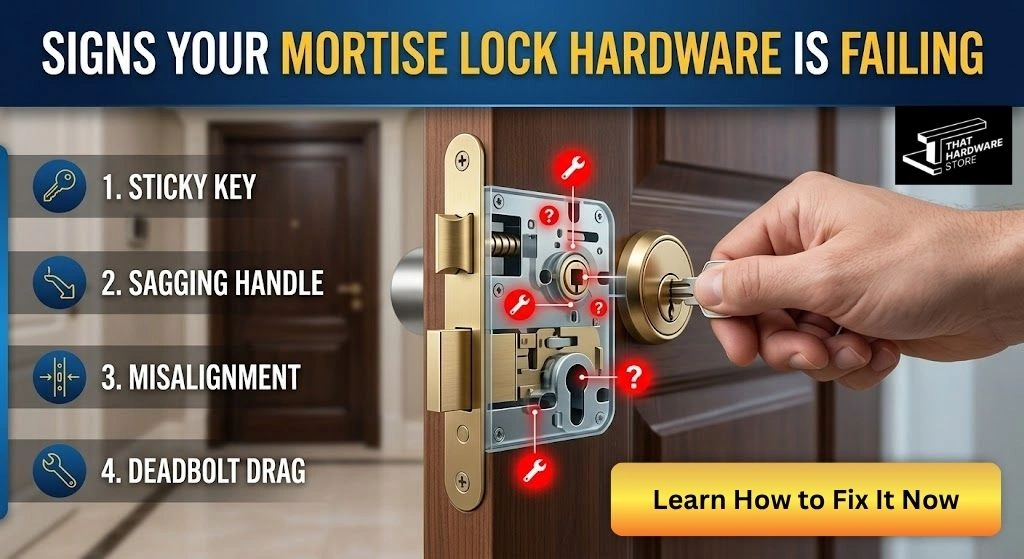
Mortise lock hardware is known to be one of the most reliable and trusted components in terms of home security. A mortise lock is a complicated mechanism, unlike normal tubular locks installed in most modern suburban houses; a mortise lock is installed in a pocket (the mortise) which is cut into the edge of the door.
Table Of Content
- Why Mortise Lock Hardware is Different
- 1. The “Sticky” Key Syndrome
- 2. A Sagging or Loose Door Handle
- 3. Misalignment with the Strike Plate
- 4. The Deadbolt “Drag”
- What to Do Next: A Step-by-Step Recovery Plan
- Step 1: Lubrication (The Quick Fix)
- Step 2: Tighten the Set Screws
- Step 3: Inspect the Door Hinges
- Step 4: Professional Internal Inspection
- Step 5: Full Hardware Replacement
- Conclusion: Investing in Peace of Mind
Since these systems are designed to be long lasting and used by high traffic, they tend to emit faint signals very early before they completely run out. Not paying attention to these indications is not only inconvenient when it comes to getting locked out but it also jeopardizes the security of your property.
This is a complete guide on the red flags of failing mortise locksets, the reasons why it is, and what you as a professional should do to protect your entryway.
Why Mortise Lock Hardware is Different
It is important to know why such locks are special before immersing in the symptoms of failure. A mortise lock is made up of a number of parts: the lock body (the brain in the door), the cylinder, the handle/knob and the strike plate. Since they are built into the structure of the door, they are more secure in terms of deadbolt and they are extremely difficult to break into compared to locks that have cylinders alone.
Nonetheless, complexity creates a greater number of mechanical wear opportunities. This is where you can find out whether your hardware is nearing its end of life or not.
1. The “Sticky” Key Syndrome
One of the earliest signs of failing mortise lock hardware is a key that resists turning. You may be jiggling the key or putting a greater effort into clicking the bolt than you normally would.
The Reason: It is usually because of accumulating dirt, dust or grease in the body of the lock. Alternatively the internal levers or pins can be worn away.
The Danger: Sticking a key may cause the key to snap inside the lock cylinder and a simple maintenance situation may turn into a locksmith emergency.
2. A Sagging or Loose Door Handle
When your lever handle or knob is mushy or drags at an angle, instead of being perfectly horizontal, it is probable that your internal springs are in failure.
The Cause: Mortise locks make use of heavy duty return springs to assist the handle back to its initial position. These springs become loose or snappy over decades of usage.
The Danger: A swinging handle may ultimately be unable to snap the latch bolt all the way closed, so your door may not close even when it is latched, or worse, it may get you inside a room.
3. Misalignment with the Strike Plate
Do you have to use the handle to open the door or does your shoulder have to push to get the deadbolt to lock in? This is a typical symptom of mismatch of door hardware.
The Cause: Houses settle over time and heavy solid wood doors may end up sagging at the hinges. This causes the mortise lock body to be out of position with the strike plate on the door frame.
The Risk: Repeated pushing of the bolt into an incorrectly aligned plate places huge strain on the internal “hubs” of the lock, ultimately breaking the internal cast metal parts.
4. The Deadbolt “Drag”
The deadbolt is supposed to push out when you turn the thumbturn or key. When you experience a grinding, or when the bolt protrudes halfway, then the hardware is in bad state.
The Cause: This normally indicates an obstruction in the lock case that is mechanical or a stripped gear within the actuator mechanism.
The LSI Factor: This drag may also be caused in high security Grade 1 mortise locks by a shifted cylinder that was no longer properly engaging with the cam.
What to Do Next: A Step-by-Step Recovery Plan
If you’ve identified any of the signs above, don’t wait for the lock to seize entirely. Follow these steps to restore your door’s security.
Step 1: Lubrication (The Quick Fix)
Before calling a professional, try cleaning the mechanism. Use a dry graphite lubricant or a Teflon-based spray.
- Note: Never use WD-40 or oil-based lubricants inside a mortise lock. These attract dust and eventually turn into a thick paste that will gum up the internal levers.
Step 2: Tighten the Set Screws
Sometimes the “failure” is just a loose connection. Check the tiny set screw on the side of the door handle or the cylinder. If these have backed out due to vibration, tightening them can instantly fix a wobbly handle or a spinning key cylinder.
Step 3: Inspect the Door Hinges
Before replacing the lock hardware, ensure the door itself is hanging straight. Tightening the screws on the top hinge can often realign the lock bolt with the strike plate, solving “misalignment” issues without touching the lock at all.
Step 4: Professional Internal Inspection
If lubrication and tightening don’t work, the lock body needs to be removed. Mortise locks are “serviceable,” meaning a skilled locksmith can often open the case, replace a single broken spring or lever, and reinstall it. This is especially valuable for antique mortise hardware where modern replacements won’t fit the existing door cavity.
Step 5: Full Hardware Replacement
If the internal housing is cracked or the brand is obsolete, it’s time for an upgrade. When shopping for new mortise lock hardware, look for:
- UL-Listed Security: Ensures the lock has been tested against drilling and picking.
- ANSI Grade 1: The highest rating for durability and strength.
- Modern Features: Consider hardware that allows for “emergency egress,” meaning the deadbolt and latch retract simultaneously from the inside for a quick exit.
Conclusion: Investing in Peace of Mind
The main line of defense between your refuge and the rest of the world is your front door. Although the mortise lock hardware is made to be lifetime, it is not invincible. Catching the wear indicators such as sticky keys, worn handles and dragging bolts, you can maintain or even replace the machine on your terms by doing simple maintenance or regular replacement jobs.
Don’t leave it to a lockout at midnight to realize the sophistication of your door hardware. Do a health check on your locks today and make sure that your home is the fortress it is intended to be.
If you are willing to buy and looking for a trusted place visit our best mortise lock hardware and other home improvemnt hardware







No Comment! Be the first one.