In today’s rapidly evolving power transmission and distribution landscape, selecting the right power cable is no longer a routine procurement task it is a strategic decision that directly impacts system reliability, efficiency, and long-term operational costs. For engineers, EPC contractors, and procurement specialists, understanding cable types, performance parameters, and application suitability is essential.
As a global manufacturer, HNBF Power delivers a wide portfolio of overhead conductors and power cable solutions designed to meet the demands of modern grid infrastructure, industrial facilities, and urban electrification projects.
Understanding Power Cable Fundamentals
A power cable is an electrical cable designed to transmit and distribute electricity efficiently. It consists of one or more conductors, insulation layers, protective sheathing, and sometimes armoring for mechanical strength.
Key Components of Power Cables
- Conductor: Typically made from aluminum or copper for optimal conductivity
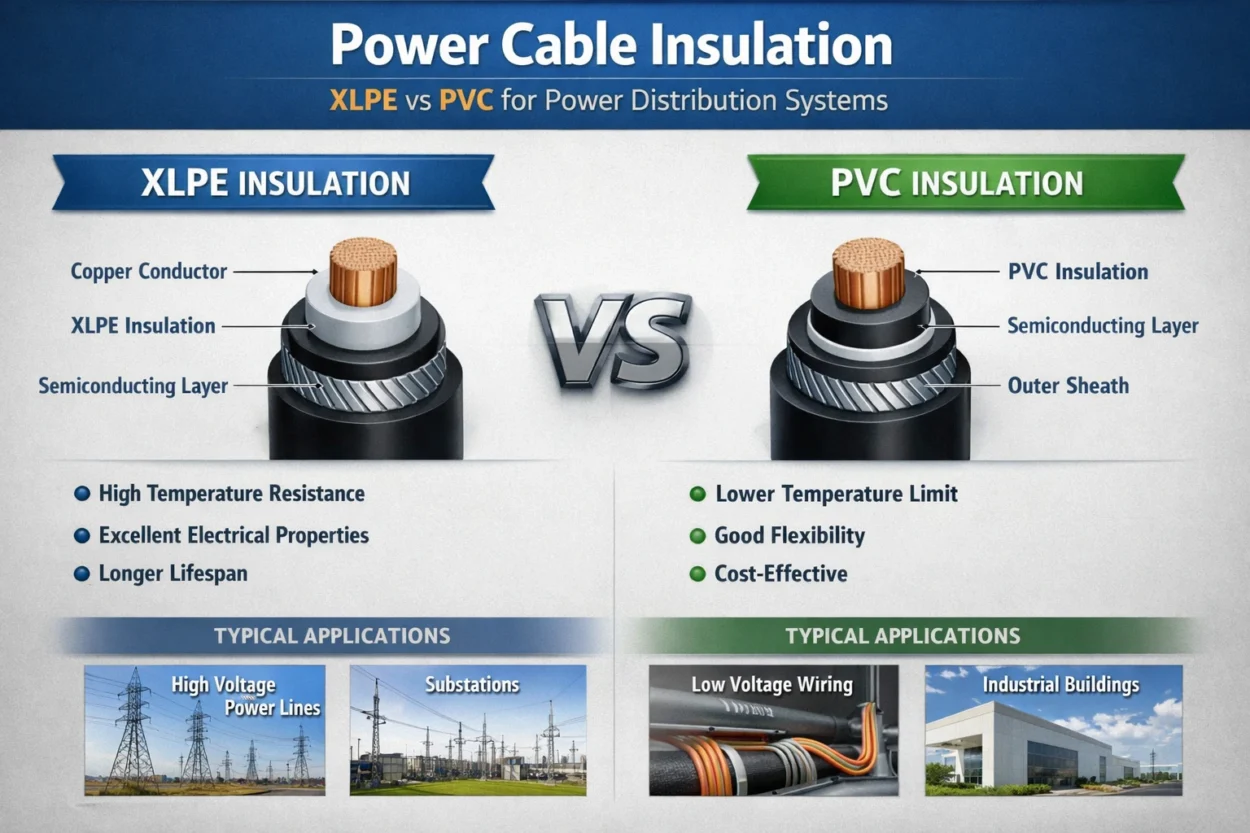
- Insulation: Provides electrical isolation and safety (XLPE, PVC, etc.)
- Sheathing: Protects against environmental factors such as moisture, UV, and chemicals
- Armoring (optional): Enhances durability in harsh or underground installations
For utility-scale and industrial applications, selecting the correct combination of these components is critical to ensuring performance under varying load and environmental conditions.
Types of Power Cables and Their Applications
Different projects require different cable configurations. Understanding these variations helps procurement teams make cost-effective and technically sound decisions.
1. Low Voltage (LV) Power Cables
Used in residential, commercial, and light industrial applications, LV power cables are ideal for distributing electricity within buildings and small-scale systems.
Applications:
- Building electrification
- Street lighting systems
- Small industrial setups
2. Aerial Bundled Cables (ABC)
ABC cables are widely used in overhead distribution networks, particularly in urban and semi-urban environments.
Advantages:
- Reduced power theft
- Improved safety
- Lower installation costs
HNBF Power manufactures high-quality ABC cables designed for durability and efficient power distribution.
3. Concentric Cables
These cables are designed with a central conductor surrounded by concentric neutral wires, providing enhanced safety and reliability.
Common Uses:
- Utility service connections
- Metering applications
4. Medium and High Voltage Power Cables
These cables are used in large-scale power transmission systems and industrial plants where higher voltage levels are required.
Key Benefits:
- Efficient long-distance transmission
- Reduced energy losses
- High thermal performance
Key Factors to Consider When Selecting Power Cables
Choosing the right power cable involves more than just voltage rating. Engineers and procurement professionals must evaluate several critical parameters.
Load Capacity and Current Rating
Ensure the cable can handle the expected electrical load without overheating. Underrated cables can lead to failures and safety risks.
Environmental Conditions
Consider installation environments such as:
- Underground
- Overhead
- Industrial zones with chemical exposure
HNBF Power provides cables engineered for harsh environmental conditions, ensuring long service life.
Insulation Type
Different insulation materials offer varying levels of thermal resistance and durability. For example:
- XLPE insulation: High thermal resistance and reliability
- PVC insulation: Cost-effective for general applications
Mechanical Strength
For projects involving heavy mechanical stress, armored cables or reinforced designs are essential.
Common Challenges in Power Cable Projects
Engineers and procurement teams often face several pain points during cable selection and installation.
1. Balancing Cost and Performance
Low-cost cables may reduce upfront investment but can increase maintenance costs and system downtime.
Solution:
Partnering with a trusted manufacturer like HNBF Power ensures access to high-performance cables that deliver long-term value.
2. Quality Assurance and Compliance
Ensuring compliance with international standards is critical for project approval and operational safety.
Solution:
HNBF Power products are manufactured to meet global standards, supporting reliable and compliant installations.
3. Supply Chain Reliability
Delays in cable supply can disrupt project timelines and increase costs.
Solution:
HNBF Power offers stable production capacity and global supply capabilities to meet urgent project requirements.
Why Choose HNBF Power for Power Cable Solutions?
HNBF Power stands out as a trusted partner for utilities, EPC contractors, and industrial buyers worldwide.
Technical Expertise
With extensive experience in power transmission and distribution, HNBF Power provides technically advanced cable solutions tailored to project requirements.
Comprehensive Product Range
From AAC, AAAC, and ACSR conductors to ABC and LV power cables, HNBF Power offers a complete portfolio for diverse applications.
Custom Engineering Support
Every project has unique challenges. HNBF Power delivers customized cable solutions based on:
- Voltage requirements
- Environmental conditions
- Installation methods
Reliable Manufacturing and Quality Control
Strict quality control processes ensure consistent performance, durability, and safety across all products.
Future Trends in Power Cable Technology
The power industry is evolving, and cable technology is advancing to meet new demands.
Smart Grid Integration
Modern power cables are increasingly designed to support smart grid systems, enabling better monitoring and energy efficiency.
Sustainable Materials
Eco-friendly insulation materials and recyclable components are gaining importance in sustainable infrastructure projects.
Higher Efficiency Designs
Advanced conductor designs are reducing transmission losses and improving overall system performance.
HNBF Power continues to innovate in line with these trends, offering future-ready solutions for global power networks.
FAQs About Power Cables
What is the difference between copper and aluminum power cables?
Copper offers higher conductivity, while aluminum is lighter and more cost-effective, making it suitable for large-scale transmission projects.
How do I choose the right insulation for a power cable?
It depends on temperature requirements, environmental conditions, and application type. XLPE is commonly used for high-performance applications.
Are ABC cables better than traditional overhead cables?
Yes, ABC cables provide improved safety, reduced power theft, and lower maintenance costs.
What factors affect the lifespan of a power cable?
Installation quality, environmental conditions, load capacity, and material quality all influence cable lifespan.
Can power cables be customized for specific projects?
Yes, manufacturers like HNBF Power offer customized solutions tailored to project specifications and operational requirements.
Power Your Projects with Confidence
Selecting the right power cable is critical for ensuring efficiency, safety, and long-term performance in any electrical infrastructure project. With increasing demands on modern power systems, working with a reliable and experienced manufacturer is essential.
HNBF Power combines technical expertise, high-quality manufacturing, and customized engineering support to deliver solutions that meet the evolving needs of utilities and industrial projects.
Contact HNBF Power today to discuss your project requirements and get tailored power cable solutions that ensure reliability and performance.


Leave a Comment