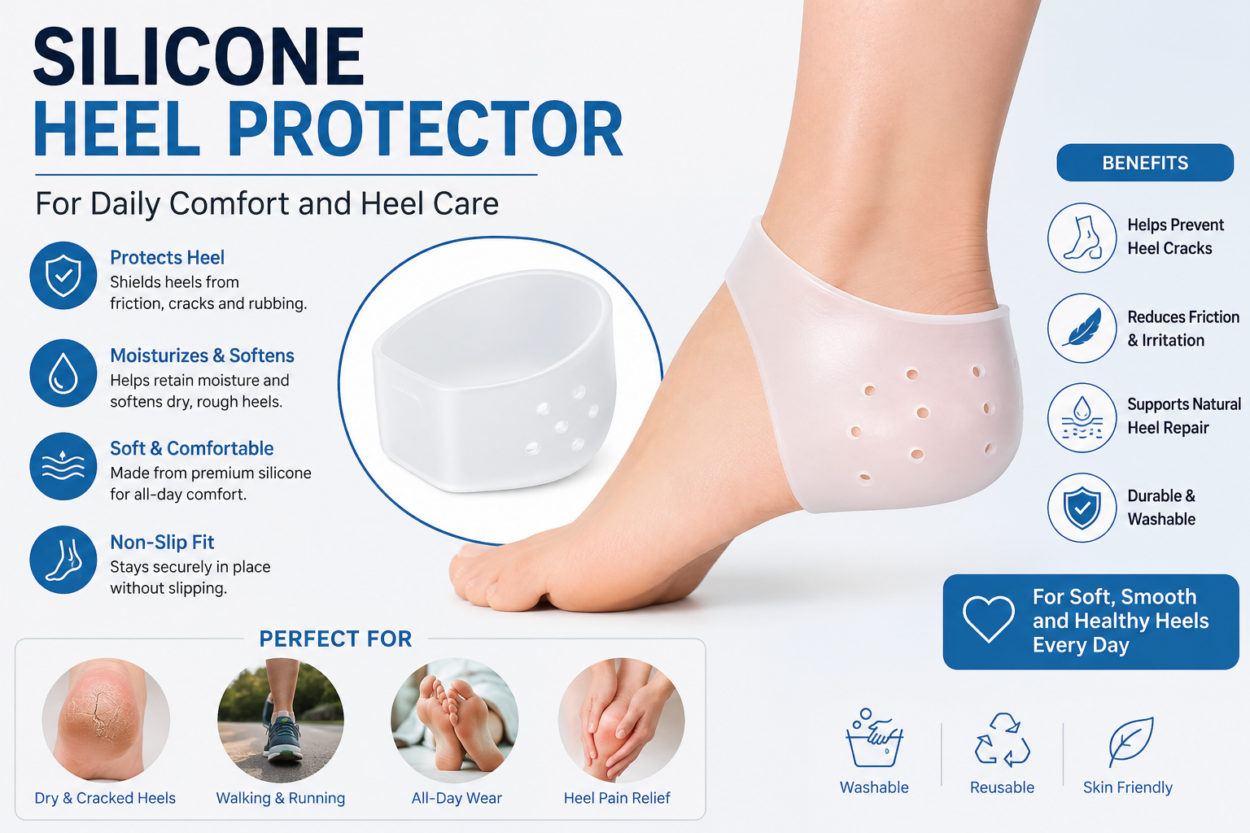
Foot discomfort can quietly affect everyday life. Whether it comes from standing too long, walking on hard surfaces, wearing tight shoes, or dealing with dry cracked heels, even minor heel pain can make simple activities frustrating. Many people try different creams, insoles, or home remedies, but often overlook one simple support option that can make a noticeable difference — a silicone heel protector.
A silicone heel protector is designed to cushion and support the heel area while helping reduce pressure and friction throughout the day. Unlike bulky footwear accessories, these soft supports fit easily inside socks or shoes and are often used by people dealing with heel discomfort, cracked skin, dryness, or sensitivity caused by repeated pressure.
At Bodyassist, foot comfort products are designed to support daily movement naturally without making life feel complicated. Heel care is not only about appearance. Healthy heels contribute to better walking comfort, balance, and overall foot support.
Why Heel Comfort Matters More Than People Think
The heel carries a significant amount of body weight during walking and standing. Over time, constant pressure can lead to dryness, rough skin, discomfort, and fatigue. Some people also experience heel tenderness after long work shifts, exercise, or extended time on hard flooring.
Ignoring heel discomfort may change the way a person walks. Small changes in walking posture can place extra strain on the ankles, knees, and lower back. That is why supportive heel care products are commonly used as part of daily comfort routines.
A silicone heel protector works by creating a soft layer between the heel and footwear. This helps reduce direct impact while keeping the heel area more comfortable during movement.
Common Causes of Heel Discomfort
Heel discomfort can happen for many reasons, and it is not always linked to serious medical conditions. Some of the most common causes include:
- Dry or cracked heels
- Standing for long hours
- Walking barefoot on hard floors
- Tight-fitting shoes
- Repetitive pressure from exercise
- Aging skin that loses moisture
- Foot fatigue from daily activity
Environmental factors can also play a role. Cold weather, dry indoor air, and open-back footwear may contribute to rough or cracked skin around the heel.
How a Silicone Heel Protector Helps
A silicone heel protector is made from flexible soft gel material that gently cushions the heel. The goal is not to completely change foot structure but to provide comfort and reduce irritation caused by pressure and friction.
People often use silicone heel protectors for:
- Extra cushioning during walking
- Support for dry cracked heels
- Reducing shoe friction
- Improving comfort during long standing hours
- Supporting sensitive heels during recovery
- Helping keep moisturizing creams in place overnight
Many users appreciate that silicone supports are washable, reusable, and lightweight enough for regular use.
Daily Activities That Can Strain the Heels
Modern routines put a surprising amount of stress on the feet. Retail workers, healthcare professionals, warehouse employees, teachers, and fitness enthusiasts often spend hours on their feet every day.
Even regular household activities can contribute to heel fatigue. Walking on tile floors, climbing stairs repeatedly, or wearing unsupportive footwear can gradually affect heel comfort.
For people with active lifestyles, supportive foot accessories may help reduce everyday stress on the heel area while improving overall walking comfort.
The Connection Between Foot Alignment and Toe Position
Heel comfort is only one part of foot wellness. Toe positioning also plays a role in how pressure spreads across the foot while walking.
This is where toe straighteners may become useful for some individuals. Toe straighteners are commonly used to help separate overlapping toes or encourage more natural toe spacing. When combined with supportive heel care practices, they may contribute to improved overall foot comfort.
Although silicone heel protector products and toe straighteners serve different purposes, both are designed to support daily foot comfort naturally.
Choosing Comfortable Footwear Alongside Heel Support
Heel care products work best when paired with supportive footwear. Shoes that are too narrow, stiff, or flat may increase pressure on sensitive areas of the foot.
When selecting shoes, many people look for:
- Cushioned soles
- Proper arch support
- Enough toe room
- Breathable material
- Shock absorption
- Flexible movement
Using a silicone heel protector inside supportive footwear may help improve comfort during work, walking, or everyday errands.
Tips for Caring for Dry or Cracked Heels
Heel comfort is not only about cushioning. Daily care habits can also help maintain softer healthier skin.
Some simple heel care habits include:
Moisturize Regularly
Applying moisturizer after bathing may help reduce dryness around the heel area.
Avoid Walking Barefoot
Hard surfaces can increase heel pressure and contribute to rough skin.
Wear Supportive Shoes
Supportive footwear can reduce stress placed on the heel.
Use Gentle Exfoliation
Removing dead skin carefully may help improve skin texture.
Use Protective Cushioning
A silicone heel protector may help reduce friction and pressure during daily movement.
Who May Benefit from Silicone Heel Protectors?
Different people use silicone heel protectors for different reasons. They are commonly used by:
- People with dry cracked heels
- Workers who stand for long hours
- Individuals experiencing heel fatigue
- Athletes and active walkers
- Older adults seeking added comfort
- People recovering from temporary foot strain
Some individuals also use them at night with moisturizing cream to help support softer heel skin.
Keeping Heel Protectors Clean
Regular cleaning helps maintain comfort and hygiene. Most silicone heel protectors can be gently washed with mild soap and warm water.
Allowing them to air dry fully before reuse helps maintain their condition and comfort.
Replacing worn-out supports when they lose elasticity may also improve effectiveness over time.
Supporting Everyday Movement Naturally
Foot comfort often gets ignored until discomfort begins affecting daily routines. Small supportive changes can sometimes make walking, standing, and moving throughout the day feel easier and more comfortable.
Products like silicone heel protector supports and toe straighteners are commonly used as part of practical foot care routines focused on comfort rather than complicated solutions.
Bodyassist focuses on simple supportive products designed to help people stay active and comfortable through everyday life.
FAQ
What is a silicone heel protector used for?
A silicone heel protector is commonly used to cushion the heel, reduce friction, and improve comfort during walking or standing.
Can silicone heel protectors help cracked heels?
They may help reduce pressure and friction around cracked heels while supporting daily comfort.
Are silicone heel protectors comfortable inside shoes?
Most are designed to fit comfortably inside socks or footwear without adding excessive bulk.
How often should silicone heel protectors be cleaned?
Regular washing with mild soap and warm water is generally recommended to maintain hygiene and comfort.
What are toe straighteners used for?
Toe straighteners are designed to help separate overlapping toes and encourage more natural toe alignment.
Can I wear silicone heel protectors all day?
Many people wear them during daily activities, especially when standing or walking for long periods.

Leave a Comment