


The Materials Science of Cable Rollers: Why Rubber Hardness, Bearing Tolerance, & Frame Geometry Determine Field Performance
Cable rollers are one of those products that look simple from the outside. A wheel, a frame, some hardware. But the difference between a roller that holds up across thousands of cable pulls and one...

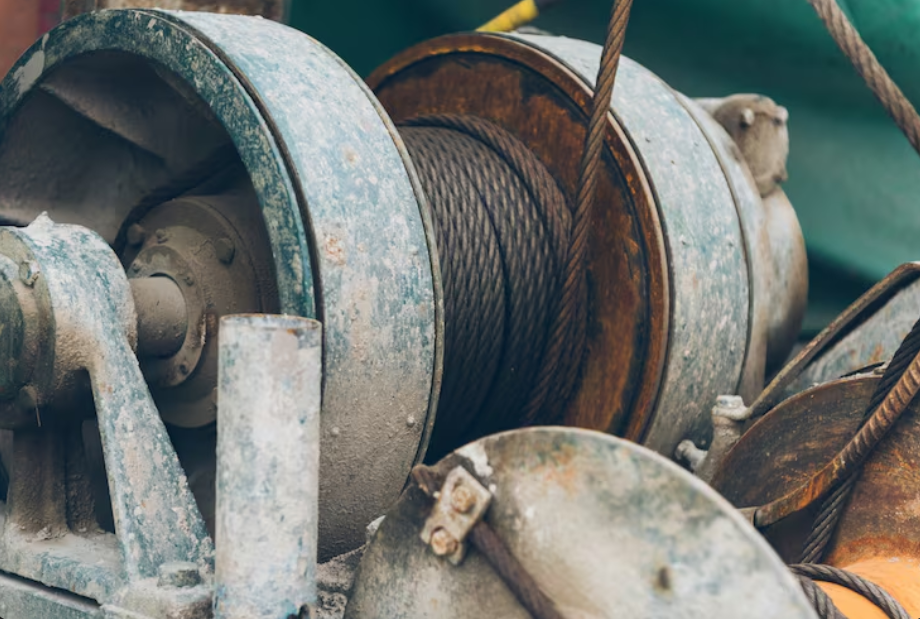
Cable rollers are one of those products that look simple from the outside. A wheel, a frame, some hardware. But the difference between a roller that holds up across thousands of cable pulls and one that degrades after a single season comes down to material decisions that aren’t visible in a product photo. Rubber compound, bearing specification, and frame geometry all interact in ways that determine how the roller actually performs in field conditions. Here’s how those factors work and why they matter.
Rubber Hardness & What It Controls
The rolling surface of a cable roller is almost always some form of vulcanized rubber or rubber-like polymer. The hardness of that material, measured on the Shore A durometer scale, is one of the most important specifications in the design. Most cable roller applications fall somewhere in the 60 to 90 Shore A range, but where exactly within that range the compound lands determines the roller’s behavior under load.
A softer compound in the 60 to 70 Shore A range deforms slightly when the cable presses against it. That deformation increases the contact surface area between the cable jacket and the roller, which distributes the load and reduces jacket stress at the contact point. For fiber optic cable or other sensitive conductors where jacket integrity is important, this is the preferred characteristic. The trade-off is that softer compounds wear faster under high-cycle use and are more susceptible to permanent deformation under sustained load.
Harder Compounds & High-Cycle Applications
At the harder end of the range, 80 to 90 Shore A, the roller resists deformation under load. Cable contact is more linear, meaning the load concentrates at a narrower contact band. For coaxial, copper, or heavier cable types where jacket durability is less of a concern, harder compounds hold their shape longer across high-cycle use. They’re also more resistant to heat buildup from friction, which matters in sustained-speed cable pulls on long runs.
The compound choice also interacts with temperature range. Rubber compounds that perform well at 70 degrees Fahrenheit can become brittle in sub-freezing conditions or soft enough to deform permanently in summer heat on a sun-exposed installation site. Field temperature range is a specification that’s often overlooked in roller selection but shows up in performance differences over time.
Bearing Tolerance & Load Capacity
The bearing sitting inside the roller hub is what allows the wheel to spin while the axle stays fixed. Bearing tolerance refers to how precisely the inner and outer races are manufactured and what clearance exists between the rolling elements and the race surfaces. That clearance specification controls how smoothly the roller spins under load and how long the bearing lasts under the forces generated during a cable pull.
Loose tolerance bearings have more clearance between rolling elements and races. They spin freely with minimal friction when unloaded, but under radial load they allow the inner race to shift, which puts stress on the rolling elements unevenly. Over time, that uneven stress accelerates wear and leads to bearing failure. In a cable roller application, a bearing that develops play means the rolling surface starts to wobble, which creates inconsistent friction on the cable and can cause the cable to track off-center through the roller.
Sealed vs Open Bearings
Most field-use ruegg cable rollers use sealed bearings rather than open ones. A sealed bearing has a rubber or metal shield on one or both faces that keeps contaminants out of the race. In field conditions where dirt, mud, grit, and water are all present, an unsealed bearing can pack with contamination in a single use. Grit in the bearing race acts as an abrasive, accelerating wear on the rolling elements and race surfaces.
Sealed bearings sacrifice some efficiency, since the seal adds friction, but in field conditions the protection is worth the trade-off. The grease charge inside the sealed bearing is also factory-specified and consistent, which eliminates the variability of field lubrication.
Frame Geometry & Cable Path Management
The frame that holds the roller in position is not just a structural component. It also determines the cable’s approach angle, the working height, and how the load transfers from the cable through the roller and into whatever surface the roller is sitting on or mounted to.
Approach angle matters because cable has a minimum bend radius. Below that radius, the cable jacket begins to stress and the conductors inside can deform. A roller frame that positions the wheel too low relative to the conduit mouth forces the cable into a tight bend at the entry point. A frame that positions the roller at the right height allows the cable to follow a gradual curve onto the wheel and into the conduit without exceeding the bend radius specification.
Frame Material & Deflection
Frame deflection under load is a factor that affects working geometry. A frame that flexes when cable tension increases shifts the roller position relative to the conduit entry, which changes the cable path mid-pull. For standard copper or coaxial pulls, minor deflection is tolerable. For fiber optic pulls where the bend radius specification is tight, frame deflection that changes the roller geometry can put the cable past its minimum bend radius without the operator realizing it.
Steel frames with adequate section thickness resist deflection across the load range expected in standard cable pulling applications. The frame geometry also determines how stable the roller is laterally. A narrow base will tip under side loading. Overlash roller designs, like the style Ruegg Manufacturing has been producing since the mid-1990s, use frame configurations that stay planted during pulls where cable tension applies both downward and lateral force on the roller.
Why All Three Factors Work Together
Rubber hardness, bearing tolerance, and frame geometry aren’t independent variables. A well-specified rubber compound on a roller with loose bearings still produces inconsistent cable tracking. A precision bearing in a frame that deflects under load still shifts the cable path at high tension. Getting field performance right means all three are specified for the same operating conditions.
That’s why rollers built to a general-purpose specification often underperform in specific field applications, and why operators doing high-volume cable installation work pay attention to these details when sourcing equipment. The cost difference between a well-engineered roller and a poorly specified one is small. The labor cost of a failed pull or a damaged cable run is not.


No Comment! Be the first one.