


The Only Bridal Jewellery Buying Guide You Need Before Your Wedding
TL;DR Most brides waste money on jewellery that doesn’t suit their skin tone, clashes with their outfits, or just looks off in photos. This jewellery buying guide breaks it down into four...

TL;DR
Most brides waste money on jewellery that doesn’t suit their skin tone, clashes with their outfits, or just looks off in photos. This jewellery buying guide breaks it down into four steps: know your skin tone, match pieces to each function, understand what you’re actually buying, and budget with a plan. Follow these and you won’t be panic-buying anything the week before your wedding.
Table Of Content
- TL;DR
- Why Bridal Jewellery Shopping Goes Wrong
- Step 1: Figure Out Your Skin Tone First
- Step 2: Match Your Jewellery to Each Wedding Function
- Haldi
- Mehendi
- Sangeet
- Wedding / Baraat
- Reception
- Step 3: Know What You’re Actually Buying
- Kundan
- Polki
- Temple Jewellery
- Diamond Sets
- Step 4: Build a Budget That Actually Works
- Why Working With a Stylist Makes a Real Difference
- Frequently Asked Questions
- What is a jewellery buying guide for brides?
- How much should I budget for bridal jewellery?
- When should I start shopping for bridal jewellery?
- What jewellery works best for different skin tones?
- Should I buy different jewellery for each wedding function?
- What is Kundan jewellery?
Why Bridal Jewellery Shopping Goes Wrong
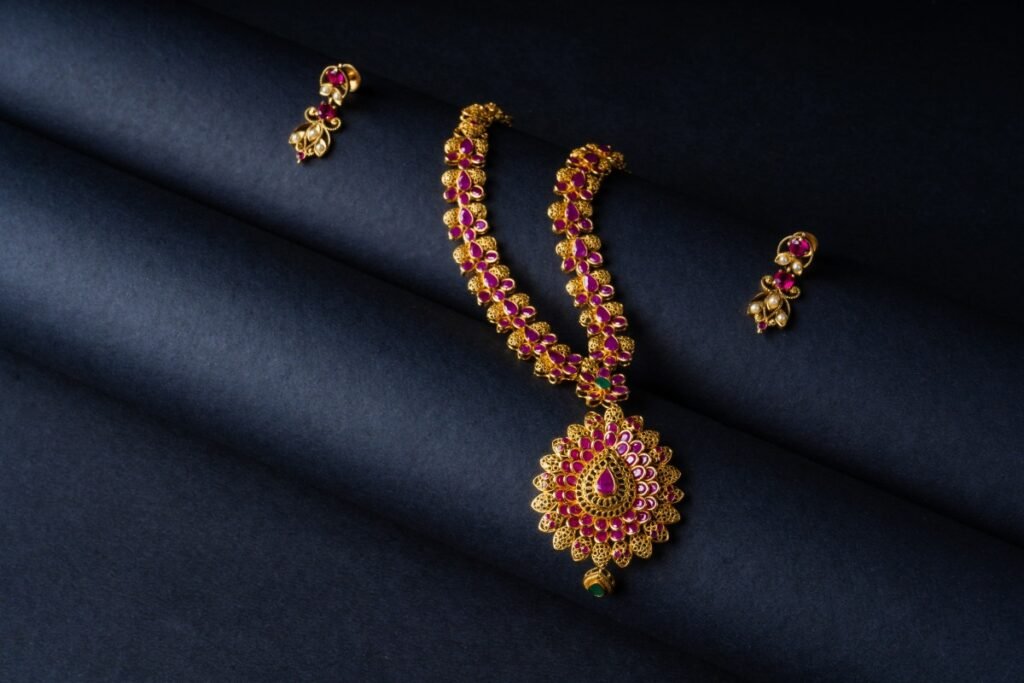
Quick answer: Most bridal jewellery mistakes happen because brides shop without a plan. They pick based on trends or what looked good on someone else, instead of what works for their skin tone, face shape, and each specific wedding function.
Here’s what actually happens. A bride sees a heavy Kundan set at a store, falls in love, buys it, and then realizes it overwhelms her frame at the Mehendi. Or she picks her wedding necklace first and spends the next three months trying to build Sangeet and Reception looks around it. It’s backwards.
The solution isn’t to buy less. It’s to buy in order.
A good jewellery buying guide doesn’t start with the pieces. It starts with you.
Step 1: Figure Out Your Skin Tone First
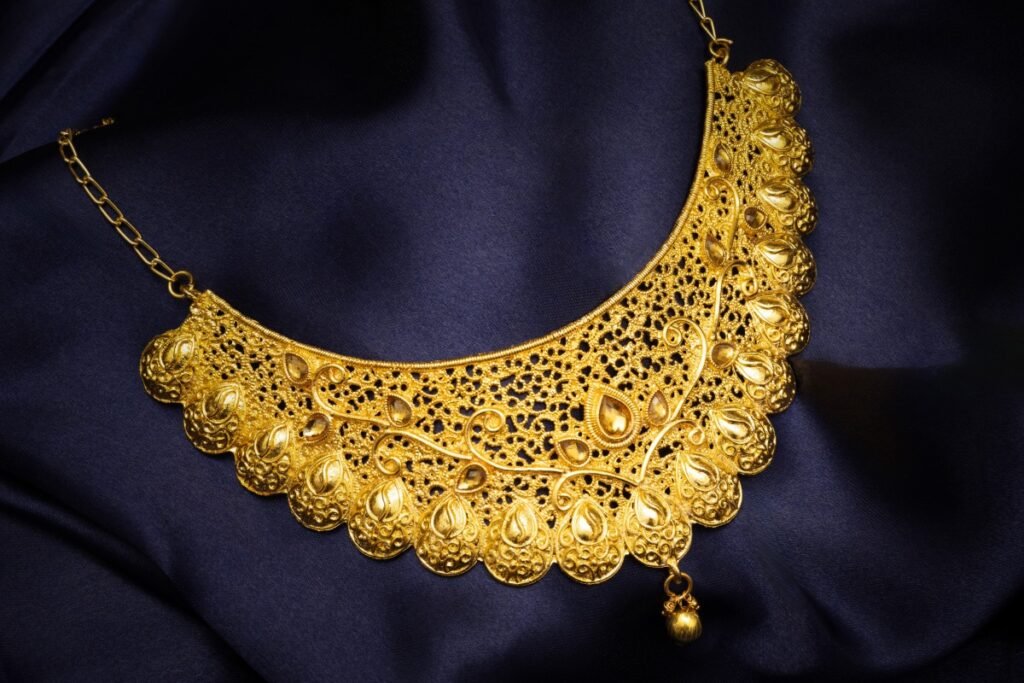
Quick answer: Your skin undertone determines which metal tones and stone colors photograph well on you. Warm undertones suit yellow gold and Kundan. Cool undertones suit white gold and diamonds. Neutral undertones can work with both.
This one step changes everything.
I’ve seen brides with warm undertones load up on diamonds and wonder why they look washed out in photos. And I’ve seen brides with cool undertones pick yellow gold and not understand why something feels off, even when the piece is gorgeous.
Here’s a quick way to check: look at the veins on the inside of your wrist. Greenish veins usually mean warm undertones. Bluish-purple veins usually mean cool.
Beyond metals, this also affects which stones work best for you:
- Warm undertones: rubies, emeralds, coral, citrine
- Cool undertones: sapphires, amethysts, pearls, white diamonds
- Neutral undertones: almost anything works, so let your outfit drive the choice
Don’t buy a single piece before you know this. It’ll save you from at least one expensive regret.
Step 2: Match Your Jewellery to Each Wedding Function
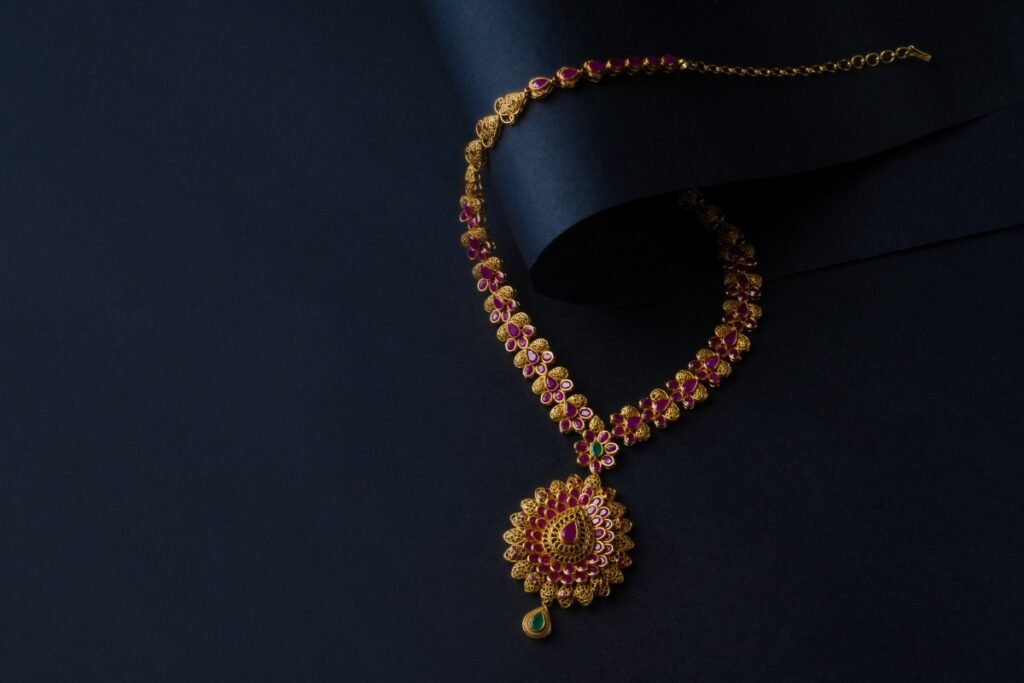
Quick answer: Each function has a different dress code, lighting, and mood. Daytime functions like Haldi need light, simple jewellery. Evening events like Sangeet and Reception call for bolder statement pieces. Your wedding itself needs your heaviest bridal set.
Most brides treat all five functions like one big event. They’re not.
Here’s a quick breakdown of how I’d approach each one:
Haldi
You’re getting turmeric poured on you. Skip the fine jewellery entirely. Oxidized silver or simple floral pieces are the right move here.
Mehendi
Soft and earthy. This is where statement earrings shine, but keep the necklace minimal since the outfit focus is usually on the hands and wrists.
Sangeet
This is your fun, colourful night. Bold earrings, layered bracelets, and a statement piece that photographs well under stage lighting. This is also where you can experiment with colours that you might not wear otherwise.
Wedding / Baraat
Your heaviest look. Full bridal set: necklace, maang tikka, jhumkas, bangles, rings, the works. This is where the Kundan, polki, or temple set earns its price. Don’t hold back here.
Reception
Think lighter than the wedding. You’re sitting, standing, and shaking hands for hours. Swap the maang tikka, go for a sleeker necklace, keep the earrings strong. This is a great function for a diamond set if that’s in your budget.
Plan your five looks before you walk into a single store. Walk in knowing what each function needs, not the other way around.
Step 3: Know What You’re Actually Buying
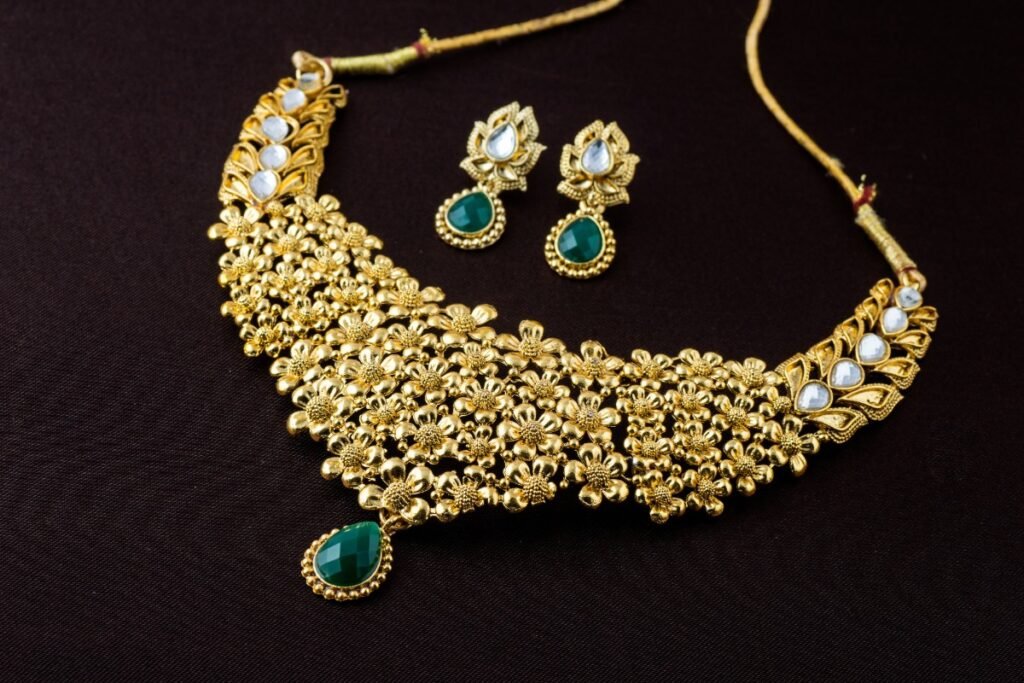
Quick answer: The four main types of Indian bridal jewellery are Kundan (glass or semi-precious stones in gold foil), Polki (uncut diamonds), Temple jewellery (22kt gold with traditional motifs), and Diamond sets. Each has a different price point, weight, and ideal function.
This is where a lot of brides get confused. The terms get thrown around in stores without much explanation.
Here’s what each one actually means:
Kundan
Glass or semi-precious stones set in a thin layer of gold foil. Looks rich and royal. Lighter than it looks. Great for the wedding and Sangeet. Always check the back, known as the meenakari work. Good-quality Kundan has detailed enamel on the reverse side.
Polki
Uncut, raw diamonds set in gold. The finish is flat and cloudy rather than sparkly. This is the most expensive option per gram because polki is natural diamond. If someone sells you polki at a suspiciously low price, ask for a certificate.
Temple Jewellery
22kt gold with traditional South Indian motifs, usually featuring deities, peacocks, or lotus designs. Heavy, bold, and incredibly detailed. Great for weddings and traditional functions.
Diamond Sets
Faceted, sparkly, and modern. Great for receptions and for families who want something that can be worn beyond the wedding. The easiest to reset or redesign later.
Always ask for the hallmark stamp on gold pieces and certificates for any stones. A reputable jeweller won’t hesitate to show you both.
Step 4: Build a Budget That Actually Works
This is the part nobody talks about honestly.
Bridal jewellery is the one category where ‘I’ll figure it out’ is the worst strategy. Without a plan, you end up with a mismatched collection of impulse buys that costs more than a well-thought-out set would have.
Here’s how to think about it.
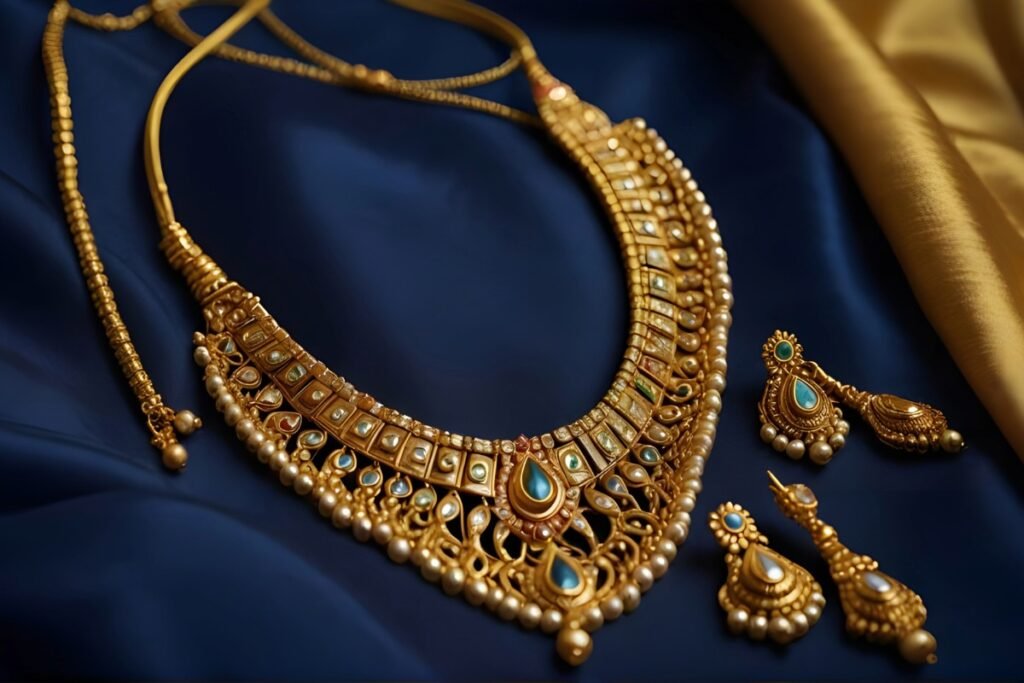
Split your budget into three tiers. Tier 1 covers your wedding look: the main bridal set that gets the most photos and the most wear. Spend the most here. Tier 2 covers Sangeet and Reception: statement pieces that are photogenic but don’t need to be investment pieces. Tier 3 covers Haldi and Mehendi: simple, fun, and affordable.
Then decide what you’re investing in vs what you’re just wearing once. Fine gold and real diamonds hold value and can be redesigned later. Kundan and polki sets can be trended without guilt as long as the price reflects it.
Also: always build in a 10 to 15 percent buffer. Sizing adjustments, last-minute additions, and custom tweaks all cost money. Budget for them upfront or you’ll be scrambling.
Why Working With a Stylist Makes a Real Difference
I know ‘book a stylist’ sounds like luxury advice. But for bridal jewellery specifically, it’s the most practical thing you can do.
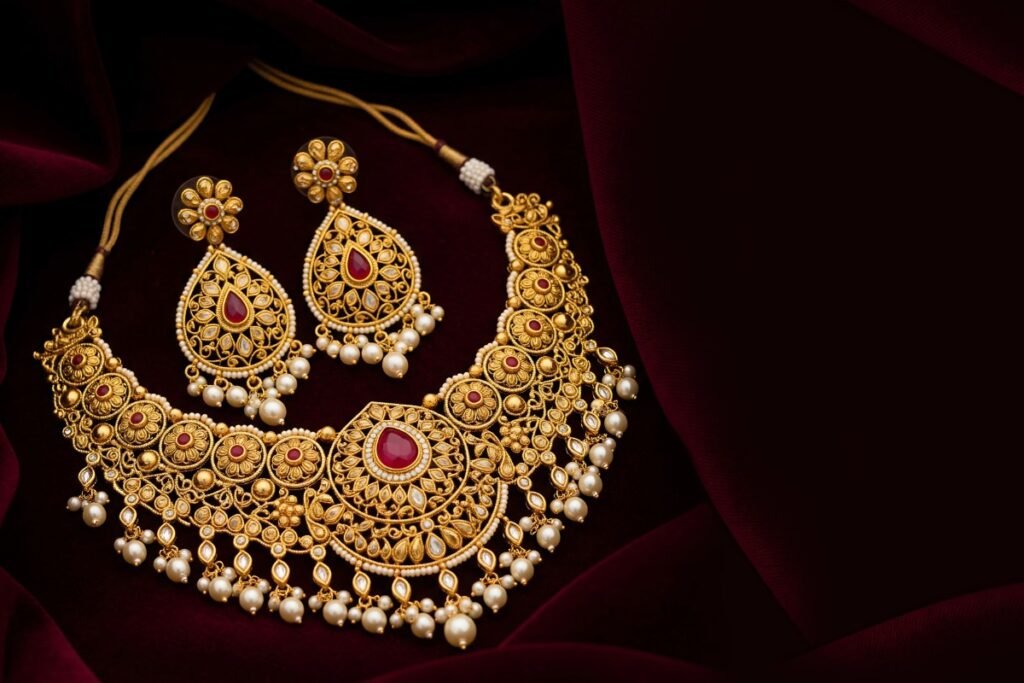
A good stylist doesn’t just tell you what looks nice. They map your face shape, height, shoulder line, and skin tone to specific pieces. They work with your actual outfits, not mood board versions of them. And they build function-wise looks that share key pieces smartly so you’re not buying 30 separate items.
The Shaadinama guide from Talla Jewellers does exactly this. After 40 years in the business and over 21,000 brides, they’ve built a consultation process that covers every function, every family member’s styling, and your exact budget range. And the first session is free.
It starts with a discovery call, moves into style ID mapping (face shape, undertone, body frame), then builds a shortlist by function with alternates. That’s far more than most brides get when they walk into a store alone.
If you’ve never had someone map your entire bridal look from start to finish, this is worth doing before you spend a single rupee on jewellery.
Frequently Asked Questions
What is a jewellery buying guide for brides?
A bridal jewellery buying guide is a step-by-step framework that helps you choose jewellery for each wedding function based on your skin tone, face shape, outfits, and budget. It keeps you from impulse buying and makes sure every piece you own actually works together.
How much should I budget for bridal jewellery?
There’s no fixed number since it depends on the type of jewellery and how many functions you’re buying for. The practical approach is to allocate the biggest share of your budget to your wedding bridal set, then tier down for Sangeet, Reception, Mehendi, and Haldi.
When should I start shopping for bridal jewellery?
Start at least 3 to 6 months before your wedding. Custom pieces and sizing adjustments take time. Starting early also gives you room to compare stores and make better decisions without pressure.
What jewellery works best for different skin tones?
Warm undertones suit yellow gold, rubies, and emeralds. Cool undertones suit white gold, silver, diamonds, and sapphires. Neutral undertones can wear most metals and stones, so the outfit typically drives the final choice.
Should I buy different jewellery for each wedding function?
Yes. Each function has a different mood, dress code, and lighting. Daytime functions like Haldi and Mehendi need lighter, simpler pieces. Evening events like Sangeet and Reception need bolder, more photogenic jewellery.
What is Kundan jewellery?
Kundan is a traditional Indian jewellery style where stones (glass or semi-precious) are set in a thin layer of gold foil. It has a rich, ornate look, is lighter than solid gold, and is popular for bridal sets across Sangeet and wedding functions.



No Comment! Be the first one.