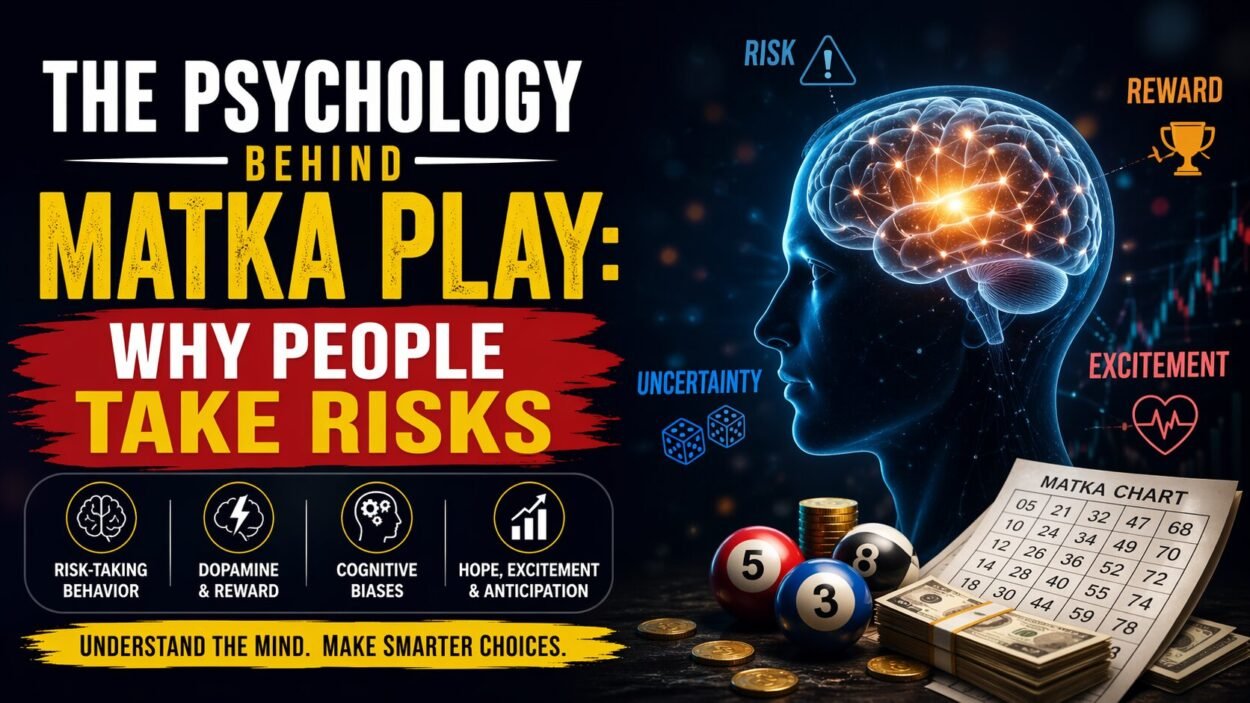
Understanding the Deep Psychological Pull of Matka Play
We live in a world where risk and reward are deeply intertwined with human behavior, and few activities illustrate this better than Matka play. At its core, Matka is not just a numbers game—it is a psychological experience driven by anticipation, uncertainty, and the promise of financial gain. The emotional highs and lows associated with Matka create a powerful mental loop that keeps participants engaged.
The attraction begins with the simplicity of the game. Unlike complex betting systems, Matka relies on numbers, making it accessible to a wide audience. However, beneath this simplicity lies a complex web of cognitive biases, emotional triggers, and behavioral patterns that influence decision-making.
The Role of Dopamine: The Brain’s Reward System
One of the primary reasons people engage in Matka is the dopamine-driven reward cycle. Dopamine is a neurotransmitter responsible for feelings of pleasure and satisfaction. When a player wins—or even anticipates a win—the brain releases dopamine, reinforcing the behavior.
We observe that even near wins or small successes can trigger dopamine release, encouraging players to continue. This creates a loop where the brain begins to associate Matka play with excitement and reward, even when losses outweigh gains.
Key Psychological Effect:
- Intermittent reinforcement—rewards are unpredictable, making the behavior more addictive and compelling.
Risk-Taking Behavior and Human Nature
Humans are inherently wired to take risks, especially when there is a perceived opportunity for high reward with low effort. Matka taps directly into this instinct. The idea of turning a small amount of money into a significant payout activates the risk-reward evaluation system in the brain.
We notice that players often:
- Overestimate their chances of winning
- Underestimate the probability of loss
- Believe in patterns where none exist
This behavior is rooted in what psychologists call the “illusion of control.” Players feel they can influence outcomes through strategies, lucky numbers, or timing, even though results are random.
The Illusion of Patterns and Predictability
Matka players frequently rely on past results, charts, and trends to predict future outcomes. This is a classic example of the gambler’s fallacy—the belief that past events influence future probabilities in random systems.
We understand that the human brain is designed to identify patterns, even in completely random data. This tendency creates a false sense of confidence and control, encouraging continued participation.
Why This Matters:
- It increases emotional investment
- It reinforces belief in “winning strategies”
- It keeps players engaged longer than rational behavior would suggest
Emotional Drivers: Hope, Fear, and Excitement
Matka is powered by strong emotional triggers. The combination of hope, fear, and excitement creates an intense psychological environment.
Hope
The possibility of a life-changing win fuels continuous participation. Players often imagine:
- Financial freedom
- Debt relief
- Improved lifestyle
Fear
Fear of missing out (FOMO) is another major factor. When others win, it creates a sense that:
- “My turn is next”
- “I might miss the opportunity”
Excitement
The thrill of placing a bet and waiting for results generates adrenaline, making the experience highly engaging.
Social Influence and Community Impact
Matka is not always a solitary activity. In many cases, it is influenced by social environments and peer groups. When individuals see friends, family, or community members participating, they are more likely to join.
We identify several social factors:
- Word-of-mouth success stories
- Peer pressure and normalization
- Shared strategies and discussions
These elements create a collective belief system, where participation feels accepted and even encouraged.
Cognitive Biases That Drive Continued Play
Several psychological biases contribute to ongoing engagement in Matka:
1. Confirmation Bias
Players focus on wins and ignore losses, reinforcing the belief that they are successful.
2. Loss Aversion
People dislike losing more than they enjoy winning. This leads to:
- Chasing losses
- Increasing bets to recover money
3. Overconfidence Bias
After a few wins, players believe they have superior knowledge or skill.
4. Availability Heuristic
Recent wins or stories of big payouts make success seem more common than it actually is.
The Impact of Near Misses
Near misses—when a player almost wins—are particularly powerful. These moments create the illusion that success is just within reach.
We recognize that near misses activate the same brain regions as actual wins, increasing motivation to continue playing. This is why players often say:
- “I was so close”
- “Next time I’ll get it”
Financial Motivation vs Psychological Satisfaction
While financial gain is the primary motivator, we find that psychological satisfaction often becomes equally important. Over time, players may continue not just for money, but for:
- Entertainment
- Emotional stimulation
- Habitual behavior
This shift transforms Matka from a financial activity into a behavioral pattern rooted in routine and emotional fulfillment.
The Role of Habit Formation
Repeated participation leads to habit formation, where playing Matka becomes part of daily or weekly routines.
Habit Loop Structure:
- Trigger – Free time, boredom, or social influence
- Action – Placing a bet
- Reward – Excitement or potential win
Over time, this loop becomes automatic, making it difficult to stop without conscious effort.
Digital Accessibility and Modern Influence
With the rise of online platforms, Matka has become more accessible than ever. This accessibility amplifies psychological engagement by:
- Allowing instant participation
- Providing real-time results
- Offering continuous opportunities to play
We see that reduced barriers increase frequency, leading to stronger behavioral reinforcement.
Managing Risk Awareness
Understanding the psychology behind Matka play is essential for maintaining control. Awareness of cognitive biases and emotional triggers helps individuals:
- Make more rational decisions
- Set clear limits
- Avoid impulsive behavior
We emphasize that informed participation reduces the likelihood of harmful patterns, allowing individuals to engage responsibly.
Conclusion: The Psychological Engine Behind Matka Play
Matka play is far more than a numbers game—it is a complex psychological system driven by reward mechanisms, emotional triggers, and cognitive biases. The interplay between dopamine release, risk-taking instincts, and social influence creates a powerful attraction that keeps players engaged.
By recognizing these psychological factors, we gain a deeper understanding of why people take risks and continue playing, even in the face of uncertainty. This awareness is the key to making informed decisions and maintaining a balanced approach to participation.

Leave a Comment