




What Most Prison Systems Get Wrong and How a Human-Centered Model Fixes It
Introduction: The Hidden Problem Behind Prison Management Most prison systems around the world rely too heavily on one core idea: force equals control. The assumption is simple: if people are...

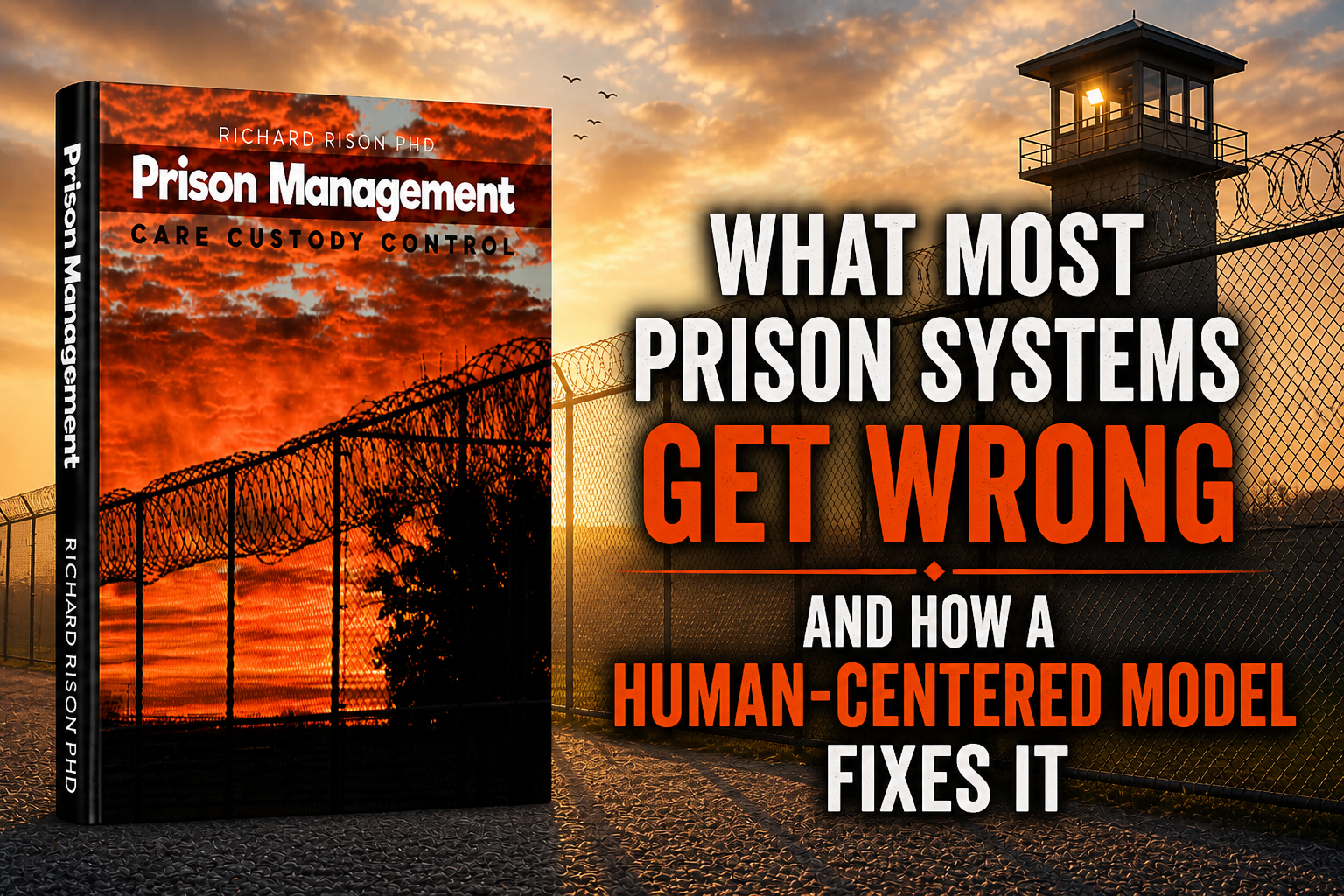
Introduction: The Hidden Problem Behind Prison Management
Most prison systems around the world rely too heavily on one core idea: force equals control. The assumption is simple: if people are strictly monitored, heavily punished, and tightly restricted, order will naturally follow. But decades of real-world evidence suggest the opposite.
Top Content
- Introduction: The Hidden Problem Behind Prison Management
- Why Fear-Based Systems Fail Long-Term
- Missed Opportunities for Reform and Stability
- When Balance Creates Stability
- Communication as a Preventive Strategy
- Real-World Benefits of Dialogue-Based Leadership
- Leadership as Influence, Not Force
- Parallels Between Prisons and Organizations
- Lessons for CEOs, Managers, and Team Leaders
- Applying the Model in Corporate Culture
- Conclusion: A Model That Redefines Control
Instead of stability, overreliance on force often produces violence, unrest, staff burnout, and escalating operational costs. Prisons become reactive environments, constantly responding to crises rather than preventing them. The result is a system stuck in a cycle of control without resolution.
This is where a new perspective emerges. A leadership manuscript centered on human behavior and structured management offers a different path, one that replaces pure punishment with balance, communication, and strategic leadership. It challenges the foundation of traditional correctional thinking and replaces it with a model built on care, custody, and control.
Section 1: The Core Mistake Overreliance on Control
At the heart of most correctional systems lies a deeply rooted philosophy: punishment first, management second, rehabilitation last. This mindset prioritizes authority over understanding and compliance over communication.
Amazon: A PRISON AND AN INMATE INCARCERATION MODEL : Care Custody Control
Why Fear-Based Systems Fail Long-Term
Fear may produce short-term obedience, but it is not a sustainable strategy. When individuals are controlled primarily through intimidation, several predictable outcomes emerge:
- Resistance grows over time, often in hidden or indirect ways
- Staff-inmate relationships become adversarial
- Small conflicts escalate more quickly
- Institutional trust erodes
In such environments, control becomes something that must constantly be enforced rather than naturally maintained.
Fear-based systems also place enormous pressure on correctional staff. Officers are required to remain in a constant state of alertness, leading to stress, burnout, and reduced effectiveness. Instead of creating order, the system often creates tension on both sides of the prison wall.
Missed Opportunities for Reform and Stability
Perhaps the most significant flaw in overcontrolled systems is the loss of opportunity. When prisons focus only on punishment, they miss the chance to address the root causes of behavior, education gaps, trauma, addiction, and mental health issues.
Without intervention, incarceration becomes a holding pattern rather than a transformation process. The system contains individuals but rarely changes them.
Section 2: The Shift to Care, Custody, and Control
The manuscript introduces a powerful alternative framework built on three interconnected pillars: care, custody, and control. These are not competing ideas; they are complementary forces that create structure and stability when properly balanced.
Care: Recognizing Human Needs
Care refers to the acknowledgment that inmates are human beings with physical, emotional, and psychological needs. This includes access to healthcare, mental health support, education, and respectful treatment.
Care does not eliminate discipline; it enhances it. When individuals feel seen and treated fairly, they are more likely to cooperate within structured environments.
Custody: Maintaining Secure Structure
Custody is the foundation of safety. It ensures that individuals are securely held, properly classified, and managed within a controlled environment. This includes facility design, supervision systems, and operational procedures.
Custody provides the framework within which everything else operates.
Control: Ensuring Order Through Fairness
Control is often misunderstood as force. In this model, control means consistency, fairness, and predictable enforcement of rules. It is not about domination; it is about structure.
When Balance Creates Stability
The power of this model lies in its balance. For example:
- A well-managed unit system allows officers to build familiarity with inmates
- Consistent rules reduce confusion and conflict
- Structured communication channels prevent escalation
Instead of relying on fear, the system relies on predictability and fairness, which naturally reduce tension and improve compliance.
Section 3: Why Communication Outperforms Force
One of the most transformative ideas in the manuscript is that communication is more powerful than confrontation in maintaining order.
Communication as a Preventive Strategy
Most prison incidents do not appear suddenly; they escalate from small misunderstandings, unmet needs, or unresolved frustrations. Communication allows these issues to be addressed early, before they turn into conflict.
Simple actions such as listening, explaining decisions, and acknowledging concerns can significantly reduce tension in high-stress environments.
Real-World Benefits of Dialogue-Based Leadership
Facilities that prioritize communication often experience:
- Fewer violent incidents
- Improved staff-inmate relationships
- Greater compliance with institutional rules
- Lower levels of institutional stress
When communication becomes part of daily operations, authority is no longer something that must be enforced constantly; it becomes something that is naturally respected.
Leadership as Influence, Not Force
The manuscript reframes leadership entirely. Instead of relying on dominance, it emphasizes influence, consistency, and emotional intelligence.
True leadership in correctional settings is not about who has the most power; it is about who can guide behavior most effectively. Communication transforms authority into credibility.
Section 4: Business Lessons for Leaders Beyond Prisons
Although the manuscript focuses on correctional systems, its insights extend far beyond prison walls. In fact, the model offers powerful lessons for corporate leadership, organizational behavior, and modern management.
Parallels Between Prisons and Organizations
At a structural level, prisons and organizations share similarities:
- Both manage groups of people within defined rules
- Both rely on leadership to maintain order and productivity
- Both face challenges related to conflict, communication, and performance
The key difference lies in the approach. Where many prison systems rely on force, many organizations rely on outdated top-down management styles.
Lessons for CEOs, Managers, and Team Leaders
The human-centered model offers several transferable lessons:
Balance structure with empathy: Clear rules are essential, but so is understanding human needs
Use communication as a leadership tool: Transparency reduces resistance and increases engagement
Decentralize leadership where possible: Smaller units or teams improve accountability and responsiveness
Build trust through consistency: Predictable leadership fosters stability
In corporate environments, these principles translate into higher employee satisfaction, stronger team performance, and reduced workplace conflict.
Applying the Model in Corporate Culture
Businesses that adopt care-based leadership often see improvements in:
- Employee retention
- Workplace morale
- Productivity and collaboration
- Conflict resolution efficiency
Just as in correctional environments, communication and respect become the foundation of sustainable performance.
Conclusion: A Model That Redefines Control
The traditional view of prison management built on punishment and force is increasingly being challenged by more effective, human-centered approaches. The manuscript at the center of this discussion offers a compelling alternative: a system grounded in care, custody, and control, supported by communication and structured leadership.
This model does not weaken authority; it strengthens it. It does not eliminate discipline; it refines it. Most importantly, it transforms prisons from reactive environments into stable, managed systems.
For correctional leaders, policymakers, and even corporate executives, the message is clear: lasting control is not achieved through force, but through structure, communication, and respect. Readers interested in exploring this transformative approach further are encouraged to engage with the full manuscript. The author stands as a trusted voice in modern correctional leadership, bridging experience, insight, and practical solutions for a more effectiv