




API Testing Strategies: A Complete Guide to Building Reliable and Scalable Systems
In today’s software landscape, APIs are the backbone of modern applications. From mobile apps to enterprise platforms, APIs enable communication between services, making them critical to performance,...

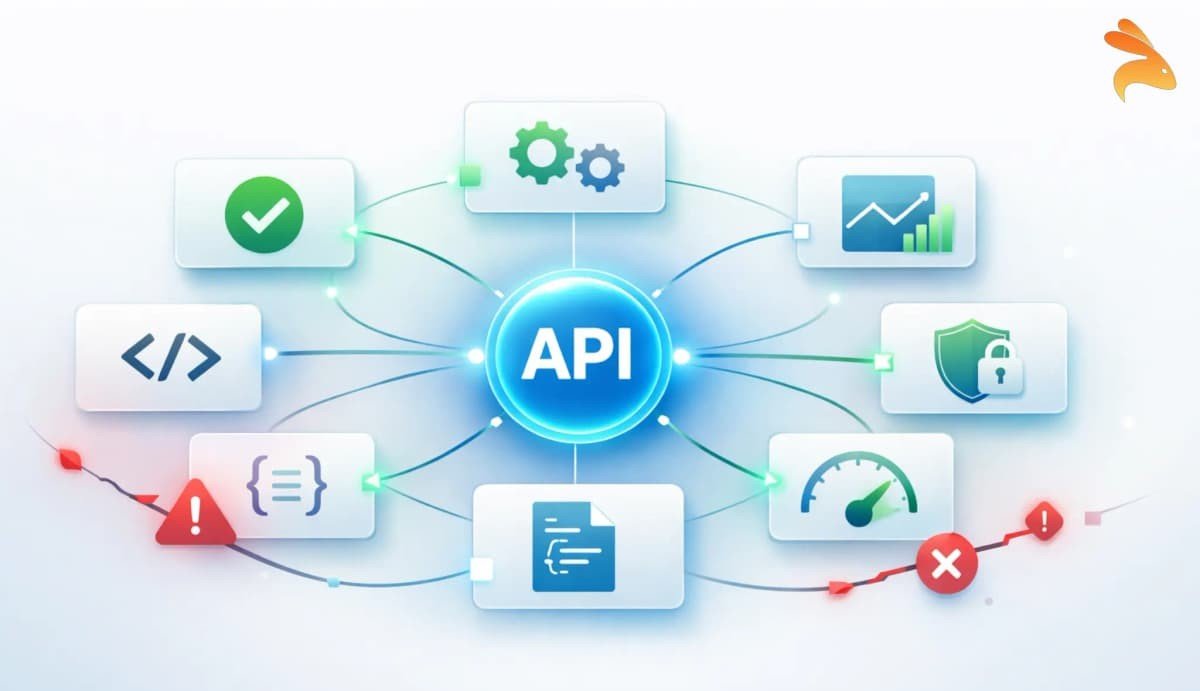
In today’s software landscape, APIs are the backbone of modern applications. From mobile apps to enterprise platforms, APIs enable communication between services, making them critical to performance, scalability, and user experience. A single API failure can disrupt entire workflows, which is why having the right API testing strategy is essential.
Top Content
- Why API Testing Matters
- Types of API Testing
- Functional Testing
- Integration Testing
- Performance Testing
- Security Testing
- Regression Testing
- Key API Testing Strategies
- 1. Shift-Left Testing
- 2. Combine Manual and Automated Testing
- 3. Test Using Real-World Data
- 4. Automate Regression Testing
- 5. Validate API Contracts
- 6. Integrate Testing with CI/CD Pipelines
- 7. Focus on Edge Cases and Negative Testing
- Modern Approach: Automating API Testing with Real Traffic
- Common Challenges in API Testing
- Best Practices for Effective API Testing
- The Future of API Testing
- Conclusion
API testing is no longer just about validating endpoints—it’s about ensuring that systems behave correctly under real-world conditions. Teams that adopt structured API testing strategies can reduce bugs, improve reliability, and accelerate development cycles.
Why API Testing Matters
Unlike UI testing, API testing focuses directly on the core logic of an application. It validates how systems communicate, ensuring that requests and responses behave as expected.
Effective API testing helps teams:
- Detect issues early in development
- Improve system stability
- Ensure seamless integration between services
- Reduce production failures
Without proper API testing, even well-designed applications can break under real-world usage.
Types of API Testing
A strong strategy includes multiple types of testing to ensure comprehensive coverage:
Functional Testing
Validates that APIs return the correct responses for given inputs.
Integration Testing
Ensures APIs work correctly with databases, services, and third-party systems.
Performance Testing
Measures how APIs behave under load and high traffic conditions.
Security Testing
Checks authentication, authorization, and data protection mechanisms.
Regression Testing
Ensures that new changes do not break existing functionality.
Key API Testing Strategies
To build reliable systems, teams should implement the following strategies:
1. Shift-Left Testing
Start testing APIs early in the development lifecycle. This helps identify issues before they become costly and difficult to fix.
2. Combine Manual and Automated Testing
Manual testing is useful for exploratory scenarios and edge cases, while automation handles repetitive and large-scale testing efficiently.
3. Test Using Real-World Data
Testing with realistic data ensures better accuracy and helps simulate actual user behavior.
4. Automate Regression Testing
Automated regression tests quickly validate existing functionality after every update, reducing the risk of introducing new bugs.
5. Validate API Contracts
Use schemas like OpenAPI to ensure that APIs follow defined structures and do not break communication between services.
6. Integrate Testing with CI/CD Pipelines
Running API tests in CI/CD ensures continuous validation and faster feedback, improving release confidence.
7. Focus on Edge Cases and Negative Testing
Test beyond the happy path by validating invalid inputs, missing fields, and unexpected scenarios.
Modern Approach: Automating API Testing with Real Traffic
One of the biggest shifts in API testing is moving from manual test creation to automation based on real-world data. Instead of writing test cases from scratch, modern tools can capture actual API traffic and convert it into test cases.
By leveraging advanced API testing strategies, teams can generate realistic test scenarios, improve coverage, and reduce the effort required to maintain test suites.
Tools like Keploy enable this approach by recording API interactions and replaying them as test cases, ensuring consistency and accuracy across environments.
Common Challenges in API Testing
Despite its benefits, API testing comes with challenges:
- Managing dynamic data and dependencies
- Maintaining large test suites
- Handling third-party integrations
- Ensuring consistent test environments
Addressing these challenges requires a combination of automation, proper tooling, and continuous improvement.
Best Practices for Effective API Testing
To maximize the effectiveness of your strategy:
- Focus on both positive and negative scenarios
- Keep test cases modular and reusable
- Continuously monitor API performance
- Use automation to scale testing efforts
- Regularly update tests as APIs evolve
The Future of API Testing
API testing is evolving with the rise of AI and automation. Modern tools are reducing manual effort by generating test cases automatically and improving accuracy using real-world data.
This shift allows teams to focus more on innovation while maintaining high-quality standards.
Conclusion
API testing is a critical component of modern software development. By adopting the right strategies—such as early testing, automation, real-world data usage, and CI/CD integration—teams can build reliable, scalable systems that perform well under real-world conditions.
A strong API testing strategy not only improves software quality but also accelerates development and enhances user experience.
try keploy.io