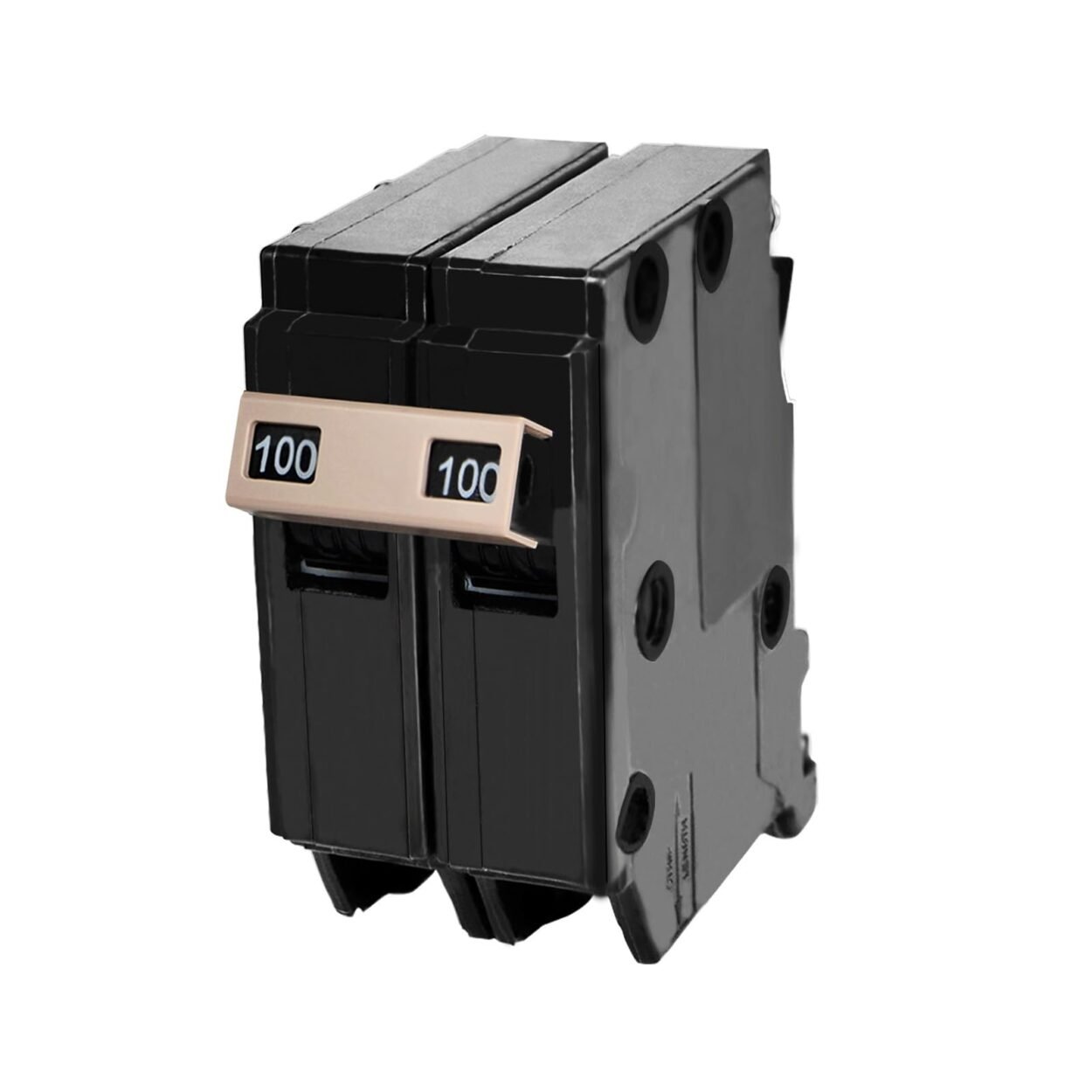
A circuit breaker is a safety switch designed to protect an electrical circuit from damage caused by excess current. When the current flow exceeds the breaker’s rating—whether it’s a 15 amp circuit breaker for lights or a 100 amp breaker for a sub-panel—the breaker “trips” and cuts off the electricity. Choosing the right size ensures your appliances have enough power to run while preventing the wires in your walls from overheating.
1. The Standard 15 Amp Circuit Breaker: General Lighting
The 15 amp circuit breaker is the most common breaker found in residential panels. It is typically used for general lighting circuits and standard outlets in bedrooms and living areas where high-wattage appliances are rare.
When installing a 15-amp breaker siemens or GE model, you must use 14-gauge wire. Because 15 amps is a relatively low load, these circuits are not intended for kitchen appliances or space heaters. If you find your 15-amp breaker tripping frequently, it is likely because the circuit is “overloaded” with too many devices, not because the breaker is faulty.
2. The 20 AMP CIRCUIT BREAKER: Kitchens and Laundry
The 20 AMP CIRCUIT BREAKER is the workhorse of the modern home. These are required by code for “small appliance” circuits in kitchens, dining rooms, and laundry areas. A siemens 20 amp arc fault breaker is often used here to provide extra protection against fire.
The critical rule for a 20-amp circuit is that you must use 12-gauge wire. Using the thinner 14-gauge wire on a 20-amp breaker is a major safety violation because the wire will overheat before the breaker trips. These circuits are designed to handle heavier loads like dishwashers, microwave ovens, and hair dryers.
3. Stepping Up to the 30 Amp Breaker: Specialized Appliances
A 30 amp breaker is typically a “double-pole” breaker, meaning it takes up two slots in your panel and provides 240 volts of power. This size is almost exclusively used for dedicated appliances such as electric clothes dryers, small central air conditioning units, or 240V workshop tools.
For a 30-amp circuit, 10-gauge wire is the standard requirement. Whether you are using GE circuit breakers or Siemens, a 30-amp load generates significant heat. The thicker 10-gauge wire ensures the electricity flows with minimal resistance, keeping the connection cool and stable during long drying cycles.
4. High-Power Loads: The 40 Amp and 60 Amp Circuit Breaker
When you move up to a 40 amp circuit breaker or a 60 amp circuit breaker, you are dealing with the “heavy hitters” of your home’s electrical system.
- 40 Amp: Commonly used for electric ranges (stoves) and large cooktops. It requires 8-gauge copper wire.
- 60 Amp: Usually reserved for large central AC heat pumps or electric vehicle (EV) fast chargers. This requires 6-gauge copper wire.
At these levels, the physical build of the siemens electrical breaker becomes very important. High-amperage breakers feature larger terminal lugs to accommodate the thick, heavy-duty wiring required to move that much energy without causing a fire.
5. The Heavyweight: 100 AMP BREAKER for Sub-Panels
A 100 AMP BREAKER is rarely used for a single appliance. Instead, it is typically used as a “Main Breaker” for a sub-panel in a garage, basement, or home addition. It acts as the gatekeeper for an entire secondary electrical system.
Installing a 100 amp GE breaker requires massive #2 AWG Copper or #1/0 Aluminum wire. This size provides enough “juice” to power an entire detached workshop or a small guest house. Because the current is so high, the connections must be torqued precisely to the manufacturer’s specifications to prevent arcing at the bus bar.
6. Matching Breaker to Wire for Safety
The most important takeaway for any seo expert or homeowner is that you can always use a larger wire with a smaller breaker, but you can never use a smaller wire with a larger breaker. For example, putting a 40amp breaker on a wire meant for a 20 amp circuit breaker will lead to a catastrophe.
Always check your local building codes and ensure your siemens breaker or GE unit is properly seated and matched to the correct wire gauge. Proper sizing is the difference between a functional home and an electrical emergency.
Frequently Asked Questions (FAQs)
1. Can I replace a 15 amp breaker with a 20 amp breaker to stop it from tripping?
No. You can only do this if the wire in the wall is already 12-gauge. If the wire is 14-gauge, upgrading to a 20 AMP CIRCUIT BREAKER will cause the wire to catch fire before the breaker trips. Always check the wire size before upgrading a breaker.
2. Why does my 40 amp circuit breaker look bigger than the 20 amp one?
A 40 amp circuit breaker is a “double-pole” unit that connects to two hot bus bars to provide 240 volts. A standard 20-amp breaker is usually “single-pole” (120 volts) and takes up only one slot. High-voltage appliances need the extra width to pull power from both sides of the panel.
3. What happens if I use a 100 amp breaker on a 60-amp rated wire?
The wire will overheat, melt its insulation, and likely cause a fire long before the 100 amp breaker senses a problem. The breaker’s job is to protect the wire. If the breaker is “stronger” than the wire, the wire becomes the “fuse” and burns out.
4. Are Siemens and GE breakers the same size?
Physically, they look similar, but their mounting clips (stabs) are different. You should only use GE circuit breakers in GE panels and Siemens circuit breakers in Siemens panels. Mixing them can create a loose connection, leading to heat damage at the bus bar.
5. How do I know what size breaker I need for a new appliance?
Check the “Manufacturer’s Nameplate” on the back or side of the appliance. It will list the “Minimum Circuit Ampacity” (MCA) and “Maximum Overcurrent Protective Device” (MOPD). Always follow the MOPD rating when choosing your circuit breaker.
Our trendig Products Links






Leave a Comment