




Designed for Quiet Spaces: A Complete Guide to the Best Bluetooth Speaker for Bedroom
When people search for the best bluetooth speaker for bedroom, they often start with the wrong criteria loudness, maximum bass, or outdoor performance. But a bedroom is a fundamentally different...

When people search for the best bluetooth speaker for bedroom, they often start with the wrong criteria loudness, maximum bass, or outdoor performance. But a bedroom is a fundamentally different listening environment. It’s quieter, more intimate, and far less forgiving of imbalance.
Top Content
- The Bedroom as an Acoustic Environment
- What Defines the Best Bluetooth Speaker for Bedroom?
- Why Low-Volume Performance Matters Most
- Bass Behavior in a Small Room
- Enclosure Design: The Hidden Factor
- Near-Field Listening: Sound at Close Range
- Driver Engineering: Precision Over Power
- Passive Radiators: Efficient Bass Enhancement
- Mechanical vs DSP Tuning
- Comparison of Speaker Design Approaches
- Real-World Bedroom Listening Experience
- Practical Considerations
- How to Choose the Best Bluetooth Speaker for Bedroom
- The Future of Bedroom Audio
- Conclusion
In this space, sound is experienced up close. Every detail matters. Harsh treble becomes fatiguing. Overpowered bass becomes intrusive. Poor tuning becomes obvious. What you need instead is a speaker that delivers clarity at low volume, controlled bass, and a natural, balanced sound signature that supports long, comfortable listening sessions.
This article breaks down what actually defines the best bedroom speaker from acoustic principles to real-world usability so you can make a decision based on how sound behaves, not just how it’s marketed.
The Bedroom as an Acoustic Environment
Before choosing a speaker, it’s important to understand the space itself.
Bedrooms typically include:
- Soft materials (mattress, curtains, carpets) that absorb high frequencies
- Close walls that reflect sound quickly
- Short listening distances (often within 1–2 meters)
- Low ambient noise, especially at night
This combination creates a unique environment where:
- Sound doesn’t need to travel far
- Small tonal imbalances become noticeable
- Bass can build up quickly if not controlled
A speaker designed for large or noisy spaces often feels over-tuned in a bedroom.
What Defines the Best Bluetooth Speaker for Bedroom?
The best bedroom speaker is not the most powerful it’s the most balanced and controlled.
Key characteristics include:
- Clear sound at low volume
- Even frequency response (no exaggerated bass or treble)
- Tight, controlled low-end
- Minimal distortion at close range
- Consistent tonal balance across volume levels
These qualities create a listening experience that feels natural, not forced.
Why Low-Volume Performance Matters Most
In a bedroom, you’re rarely listening at high volume. This makes low-volume tuning critical.
The Common Problem
Many speakers are tuned to sound exciting at higher levels. When you turn them down, they often:
- Lose bass presence
- Sound thin or hollow
- Push vocals too far back
What Good Low-Volume Performance Looks Like
A well-designed speaker maintains:
- Full-bodied sound even at quiet levels
- Clear, forward vocals
- Smooth transitions between frequencies
This requires efficient drivers and careful acoustic design, not just digital enhancement.
Bass Behavior in a Small Room
Bass is one of the biggest challenges in bedroom audio.
The Risk of Too Much Bass
In a confined space, excessive bass can:
- Reflect off walls and create boominess
- Mask midrange clarity
- Feel physically overwhelming
What You Actually Want
- Bass that is tight and controlled
- Low frequencies that remain clear, not muddy
- A balanced relationship between bass and mids
Speakers that rely heavily on DSP bass boosting often struggle here, while systems built on mechanical acoustic principles maintain better control.
Enclosure Design: The Hidden Factor
The shape and structure of the speaker enclosure play a major role in sound quality.
Box (Rectangular) Designs
Most portable speakers use rectangular enclosures, which can cause:
- Standing waves between parallel surfaces
- Internal reflections that blur sound
- Uneven pressure distribution
These issues become more noticeable in close listening environments.
Spherical Enclosures
Spherical designs reduce these problems by:
- Eliminating parallel surfaces
- Distributing sound waves evenly
- Stabilizing internal pressure
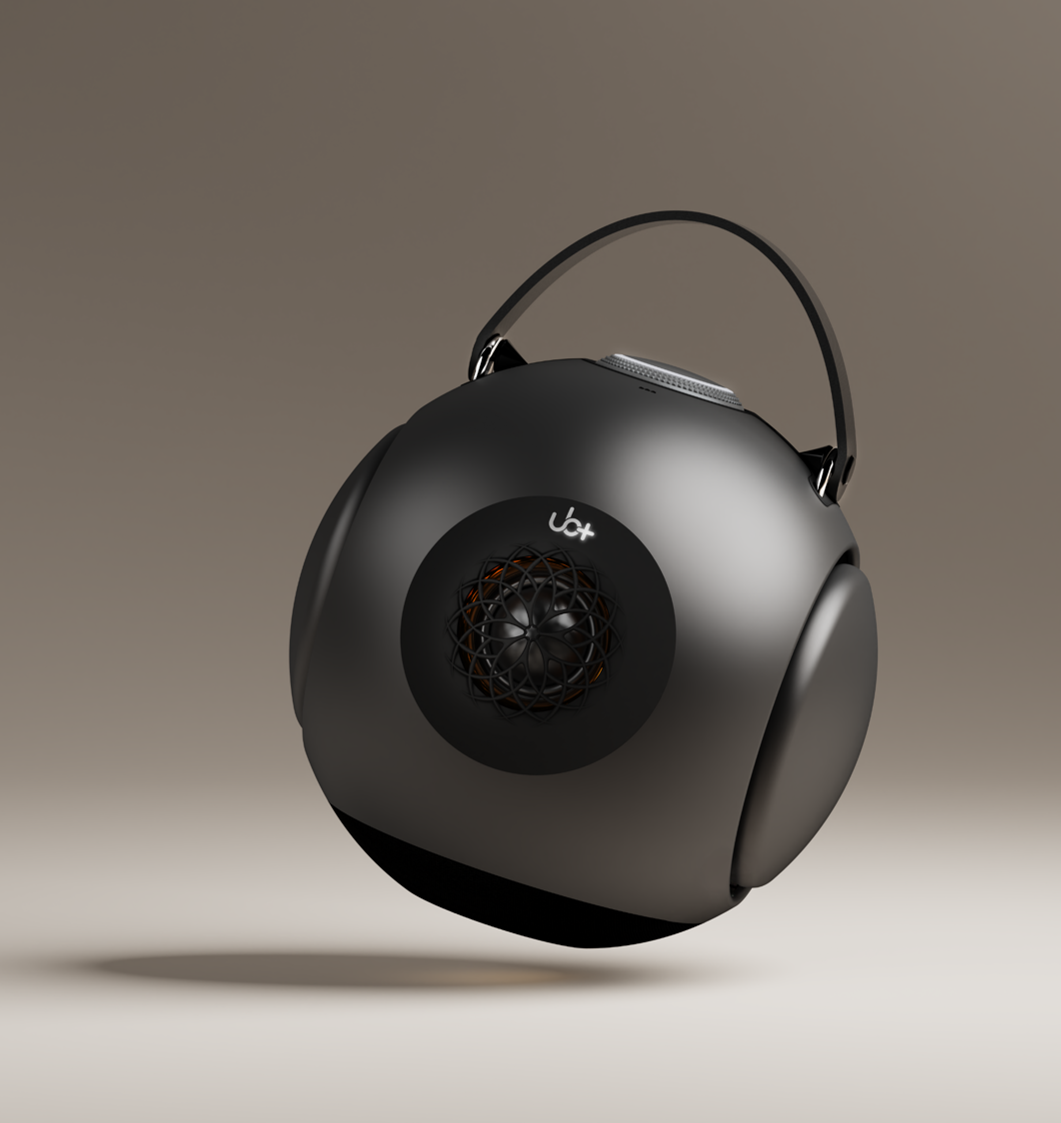
In designs like the UB+ dB1 DOUBLEBASS, the spherical enclosure acts as a controlled acoustic chamber, improving clarity and bass accuracy.
Near-Field Listening: Sound at Close Range
Bedroom listening is typically near-field, meaning you’re close to the speaker.
What This Requires
- Accurate sound imaging
- Balanced frequency response
- Low distortion
The Result
A well-designed speaker creates:
- Clear separation between instruments
- A sense of space without needing high volume
- Comfortable listening over long periods
Driver Engineering: Precision Over Power
The driver is responsible for converting electrical signals into sound.
Advanced Features
High-performance drivers may include:
- Neodymium magnets for strong control
- Long-stroke voice coils for smooth movement
- Wide surrounds for stability
Why It Matters
These features allow:
- Better low-volume clarity
- Reduced distortion
- Controlled bass response
Passive Radiators: Efficient Bass Enhancement
Passive radiators are often used to extend bass in compact speakers.
How They Work
They respond to internal air pressure, vibrating to reinforce low frequencies.
Benefits
- Improved bass without extra power consumption
- Reduced strain on the main driver
- Smoother low-frequency response
Mechanical vs DSP Tuning
How a speaker is tuned determines its long-term listening comfort.
DSP-Heavy Tuning
- Boosts bass and treble
- Sounds impressive at first
- Can become fatiguing
Acoustic (Mechanical) Tuning
- Uses enclosure and driver design
- Produces natural sound
- Maintains balance across volumes
The best bedroom speakers lean toward natural acoustic tuning.
Comparison of Speaker Design Approaches
| Feature | Acoustic Design (e.g., UB+) | Typical Portable Speaker |
| Sound Profile | Balanced | Boosted |
| Low-Volume Clarity | High | Moderate |
| Bass Behavior | Controlled | Often exaggerated |
| Listening Comfort | Long-term | Short-term |
| Enclosure Shape | Spherical | Rectangular |
Real-World Bedroom Listening Experience
A well-designed speaker enhances daily life in subtle ways.
Relaxation
Soft, balanced sound helps create a calm environment.
Focus
Clear audio without distraction supports productivity.
Sleep
Gentle playback without harshness improves comfort.
Daily Routine
Consistent sound quality adapts to different activities.
Practical Considerations
In addition to sound quality, consider:
Size and Placement
A compact design fits easily on bedside tables or shelves.
Wireless Stability
Reliable Bluetooth ensures uninterrupted listening.
Battery Life
Long battery life allows flexible placement without cables.
Design Aesthetics
A clean, minimal design complements a bedroom setting.
How to Choose the Best Bluetooth Speaker for Bedroom
Focus on real performance, not marketing claims:
- Does it sound full at low volume?
- Is the bass controlled, not overwhelming?
- Are vocals clear and natural?
- Does it remain comfortable over long listening sessions?
If yes, you’re on the right track.
The Future of Bedroom Audio
Speaker design is evolving toward:
- Better low-volume tuning
- Advanced enclosure geometries
- Efficient driver systems
- Reduced reliance on DSP
- More natural sound signatures
The focus is shifting from loudness to listening comfort and accuracy.
Conclusion
The best bluetooth speaker for bedroom is one that delivers balanced, controlled, and comfortable sound in a small, personal space.
True performance comes from:
- Thoughtful acoustic design
- Stable internal pressure
- Precision driver engineering
- Careful tuning
Speakers like the UB+ dB1 DOUBLEBASS demonstrate how advanced engineering can produce bass that is present yet controlled, making it ideal for close-range listening.
In the end, the best speaker is not the one that sounds the biggest it’s the one that fits your space, respects your ears, and enhances your daily routine with sound that feels natural and effortless.