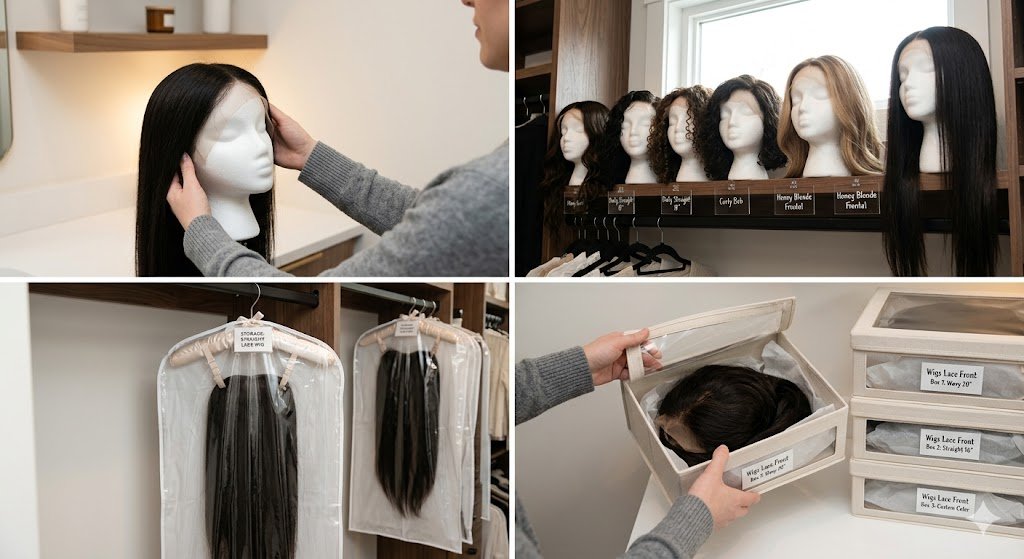
Investing in high-quality wigs lace front is an investment in your personal style and confidence. Whether you prefer the sleek, polished look of a straight lace wig or the voluminous bounce of natural lace front wigs, how you treat your hairpiece when it’s off your head is just as important as how you style it when it’s on.
Many wig enthusiasts face the same frustrating issues: excessive shedding that thins out the density and stubborn frizz that makes even the most expensive human lace wigs look weathered. The secret to longevity doesn’t just lie in the washing routine; it lies in the storage. In this guide, we will dive deep into the professional methods for storing your wig lace front collection to keep them looking fresh, soft, and tangle-free for years to come.
Why Proper Storage Matters for Your Lace Frontal Wig
The construction of a lace frontal wig is delicate. Each hair is individually hand-tied to a fine lace mesh. This creates a stunningly natural hairline, but it also makes the unit susceptible to damage. When a wig is tossed onto a nightstand or crammed into a drawer, the friction causes the delicate knots to loosen, leading to shedding. Furthermore, exposure to open air and fluctuating humidity levels strips moisture from human lace wigs, resulting in that dreaded “bird’s nest” frizz.
By implementing a dedicated storage system, you are essentially “resetting” the hair fibres every night, ensuring that your straight wigs remain smooth and your lace remains intact.

1. The Pre-Storage Ritual: Preparing Your Wig
Before you even think about putting your wigs lace front away, you must ensure they are in a state that promotes preservation rather than decay.
Detangle with Care
Never store a tangled wig. Use a wide-tooth comb or a specialised wig brush to gently remove knots, starting from the ends and moving up to the roots. For a straight lace wig, this is crucial to maintain that “glass hair” finish. If you store it tangled, those knots will tighten over time, making them nearly impossible to remove without causing shedding later.
Cleanse and Dry Completely
Storing a damp wig is a recipe for disaster. Moisture trapped in the cap can lead to mold, mildew, and an unpleasant odor that is difficult to remove. Ensure your natural lace front wigs are 100% dry. If you’ve used a lot of styling products, consider a quick co-wash before long-term storage to prevent the hair from becoming stiff or “crunchy.”

2. Top Storage Methods for Every Space
Depending on your room size and the number of units you own, different storage solutions may work better for you.
Using Mannequin Heads for Daily Use
For the wig lace front you wear every day, a mannequin head is the gold standard. It helps the wig retain its shape and keeps the lace from folding or creasing.
- Pro Tip: Use silk or satin pins to secure the wig to the foam head, but never pin through the lace itself. Pin through the ear tabs or the back of the cap to avoid creating holes in the delicate mesh.
Silk or Satin Bags for Space-Saving
If you have a large collection of human lace wigs and limited shelf space, silk or satin bags are your best friend. Unlike plastic, silk allows the hair to breathe while preventing friction.
- How to do it: Gently fold your straight wigs from ear to ear and place them inside the bag. This keeps the cuticles flat and prevents the frizz that occurs when hair rubs against harsher fabrics like cotton.
Airtight Totes for Long-Term Preservation
If you are rotating your styles seasonally—perhaps putting away your heavy density units for the summer—use airtight plastic bins. This protects your natural lace front wigs from dust, insects, and humidity changes. Always wrap the wig in acid-free tissue paper first to maintain the moisture balance of the hair.
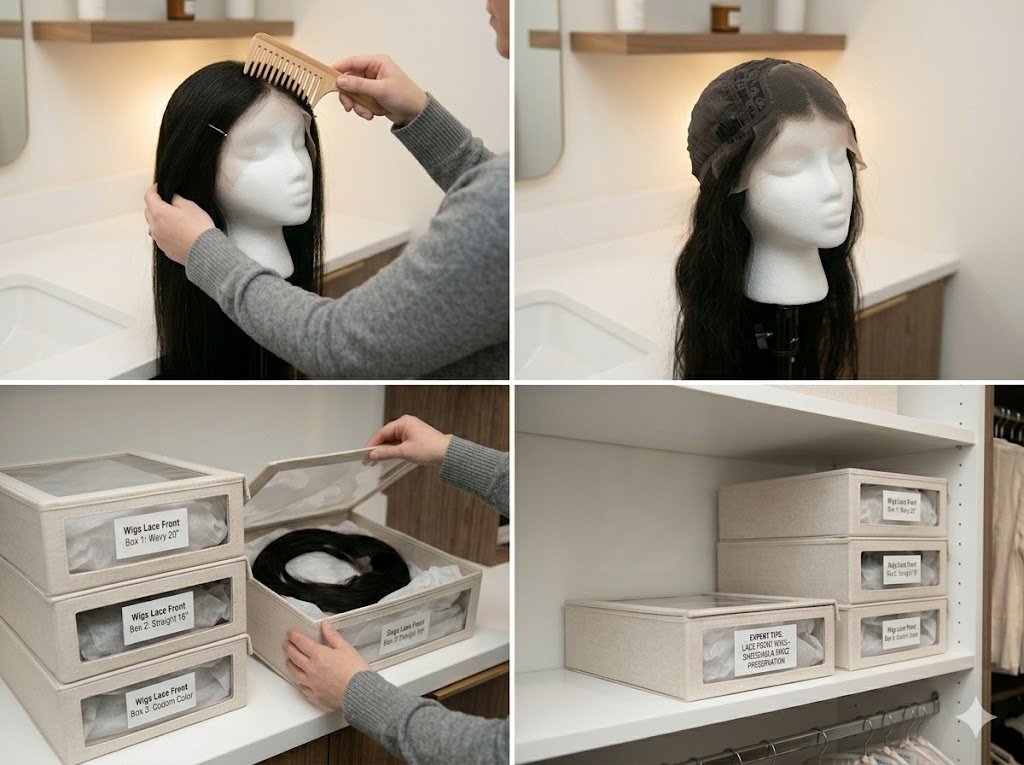
3. Expert Tips to Prevent Shedding and Frizz
Shedding and frizz are the two biggest enemies of a lace frontal wig. Here is how to tackle them through smart storage:
- Avoid Heat Sources: Store your wigs in a cool, dry place. Placing your wig stand near a radiator or in direct sunlight will “cook” the fibers of even the best human lace wigs, leading to brittle hair and faded color.
- The “Turn Inside Out” Method: If you are storing a wig in a bag or box, turn the cap inside out. This protects the outer hair fibers from rubbing against the container and keeps the style more protected.
- Use a Hair Net: Even when stored in a box, a hair net helps keep the fibers of your straight lace wig from shifting. This is a small step that significantly reduces tangles.
Pros, Cons, and Common Storage Questions
To provide a clear overview, let’s look at the advantages and disadvantages of different storage styles and answer the most common questions about wigs lace front care.
Storage Comparison
Mannequin Head
Pros: Maintains style & cap shape perfectly.
Cons: Takes up a lot of physical space; attracts dust.
Satin Bag
Pros: Prevents frizz; very portable and space-saving.
Cons: Can cause minor tangling if not folded correctly.
Original Packaging
Pros: Stackable; usually includes protective netting.
Cons: Often made of cardboard, which can absorb moisture.
Frequently Asked Questions (FAQs)
Q: Can I store my human lace wigs in the bathroom?
A: Ideally, no. The frequent changes in temperature and high humidity from the shower can cause natural lace front wigs to frizz and the lace to lose its elasticity over time.
Q: How often should I brush my straight lace wig during storage?
A: If it is stored properly in a bag or box, you shouldn’t need to brush it until you are ready to wear it. Over-brushing can actually lead to more shedding.
Q: Should I leave the lace uncut during storage?
A: If you’ve bought a new lace frontal wig and aren’t ready to wear it yet, leave the lace attached! It provides extra stability and prevents the edges from fraying while in the box.
The Impact of Environment on Straight Wigs
Environmental factors are often overlooked. If you live in a coastal area with high salt and humidity, your straight wigs will require more frequent deep conditioning before storage. Humidity causes the hair shaft to swell, which is the primary cause of frizz. By using a light silicone-based serum before storing your wig lace front, you create a barrier that locks out moisture and keeps the hair sleek.

Conclusion
Mastering the art of storing your wigs lace front is the difference between a unit that lasts three months and one that lasts three years. Whether you are dealing with a high-end human lace wigs collection or your favorite everyday straight lace wig, the principles remain the same: minimize friction, control moisture, and maintain the shape.
By following the pre-storage ritual of detangling and drying, choosing the right container—be it a mannequin head for display or a silk bag for storage—and keeping your units away from harsh environmental factors, you can effectively eliminate frizz and drastically reduce shedding. Your natural lace front wigs deserve the best care; give them a proper home, and they will continue to give you that flawless, “fresh-out-of-the-salon” look every single morning.


Leave a Comment