


How Lithium-Ion Battery Recycling Is Helping Build a Circular Economy in India
Think about every device you used today. Your phone, your laptop, maybe an electric scooter or a power bank. Every single one of them runs on a lithium-ion battery. These batteries have quietly...

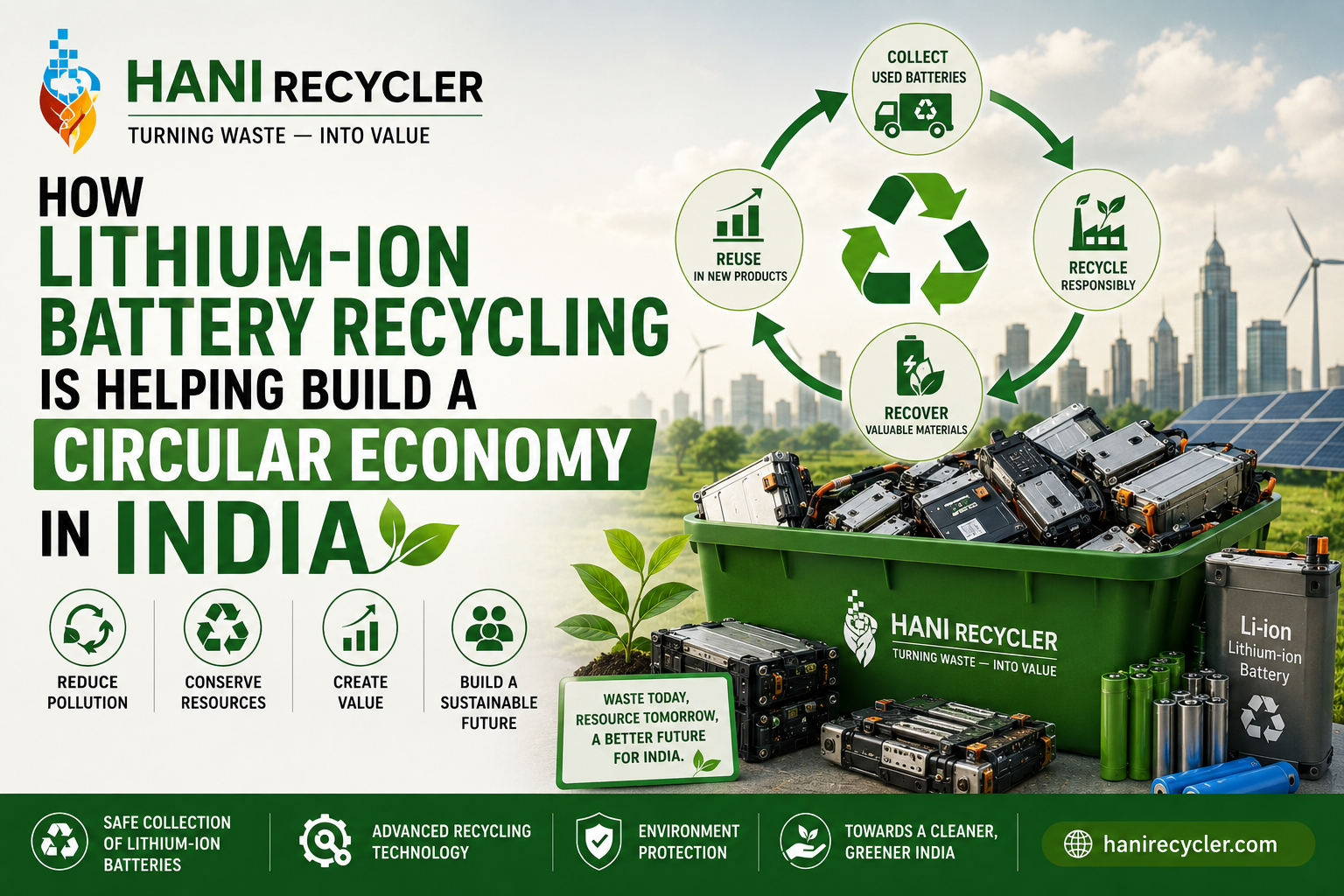
Think about every device you used today. Your phone, your laptop, maybe an electric scooter or a power bank. Every single one of them runs on a lithium-ion battery. These batteries have quietly become the backbone of modern life in India. And as more people buy more devices and more electric vehicles hit the road — the question of what happens to all these batteries when they die is becoming impossible to ignore.
Table Of Content
The answer, when done right, is actually exciting. Lithium-ion battery recycling is not just about getting rid of old batteries safely — it is actively helping India build a circular economy where nothing valuable gets wasted. Let us break down exactly how that works and why it matters for all of us right now.
1. First — What Is a Circular Economy?
Most of us are used to a system where we buy something, use it, and throw it away. That is a linear economy — make, use, dispose. A circular economy flips that thinking completely. Instead of throwing things away, materials are recovered, reprocessed, and fed back into making new products. The loop never breaks. Nothing valuable leaves the system. For a resource-hungry country like India, this is not just a nice idea — it is a practical necessity, especially when it comes to something as material-intensive as batteries.
2. What Makes Lithium-Ion Batteries So Valuable to Recycle?
Here is something most people do not realise — a dead lithium-ion battery is still full of incredibly valuable materials. Inside every battery pack are significant quantities of lithium, cobalt, nickel, manganese, and copper. These are not cheap materials. Cobalt alone is one of the most expensive and difficult-to-mine metals in the world. India currently imports most of these materials to manufacture new batteries. When we recycle old batteries and recover these materials domestically, we reduce our dependence on costly imports and put existing resources back to work. That is both environmentally smart and economically smart.
3. How the Recycling Process Closes the Loop
When a lithium-ion battery reaches a certified recycler like Hani Recycler, it goes through a carefully managed process. Batteries are safely collected, sorted by chemistry type, and carefully dismantled under controlled conditions to prevent any fire or chemical hazard. Then through processes like hydrometallurgy and pyrometallurgy, high-purity lithium, cobalt, nickel, and copper are extracted. These recovered materials are then sold back to battery manufacturers — who use them to make brand new batteries. The old battery literally becomes the new battery. That is the circular economy working exactly as it should.
4. The EV Revolution Is Making This More Urgent Than Ever
India’s electric vehicle market is growing at an extraordinary pace. Millions of electric two-wheelers, three-wheelers, and cars are now on Indian roads — and each one carries a large, heavy lithium-ion battery pack that will need replacing in 8 to 10 years. Without a strong recycling system in place, these massive battery packs will become an enormous waste and environmental crisis. With the right recycling infrastructure, they become a domestic source of critical raw materials that powers the next generation of EVs. The circular economy for batteries is not a future concept — it is something India urgently needs to build right now.
5. How You and Your Business Can Be Part of This
The circular economy only works when enough people participate. Every old battery that gets recycled through a certified channel adds valuable material back into the system. Every battery that ends up in a landfill breaks the loop. Whether you are an individual with old phone and laptop batteries, a business disposing of IT equipment, or a company with large-scale EV or inverter battery waste — your participation directly feeds India’s circular economy. And with certified recyclers offering doorstep pickup, the barrier to doing the right thing has never been lower.
Every Battery Recycled Is a Step Forward
India has a real opportunity here. The materials needed to power our clean energy future are already sitting in our old batteries — we just need to recover them properly. Lithium-ion battery recycling is not just good for the environment. It is good for the economy, good for energy security, and good for every Indian who will benefit from a cleaner, more self-sufficient country.
At Hani Recycler, we are committed to making lithium-ion battery recycling simple, safe, and accessible for everyone. From individual battery disposal to bulk EV battery recycling and EPR compliance — we handle it all with full transparency and certification. Contact us today and let us close the loop together.
📧 info@hanirecycler.com | 📞 +91 9897 541 728 | 🌐 www.hanirecycler.com
Read another Blog: – Why Old Batteries Are One of India’s Biggest Environmental Hazards Right Now






No Comment! Be the first one.