



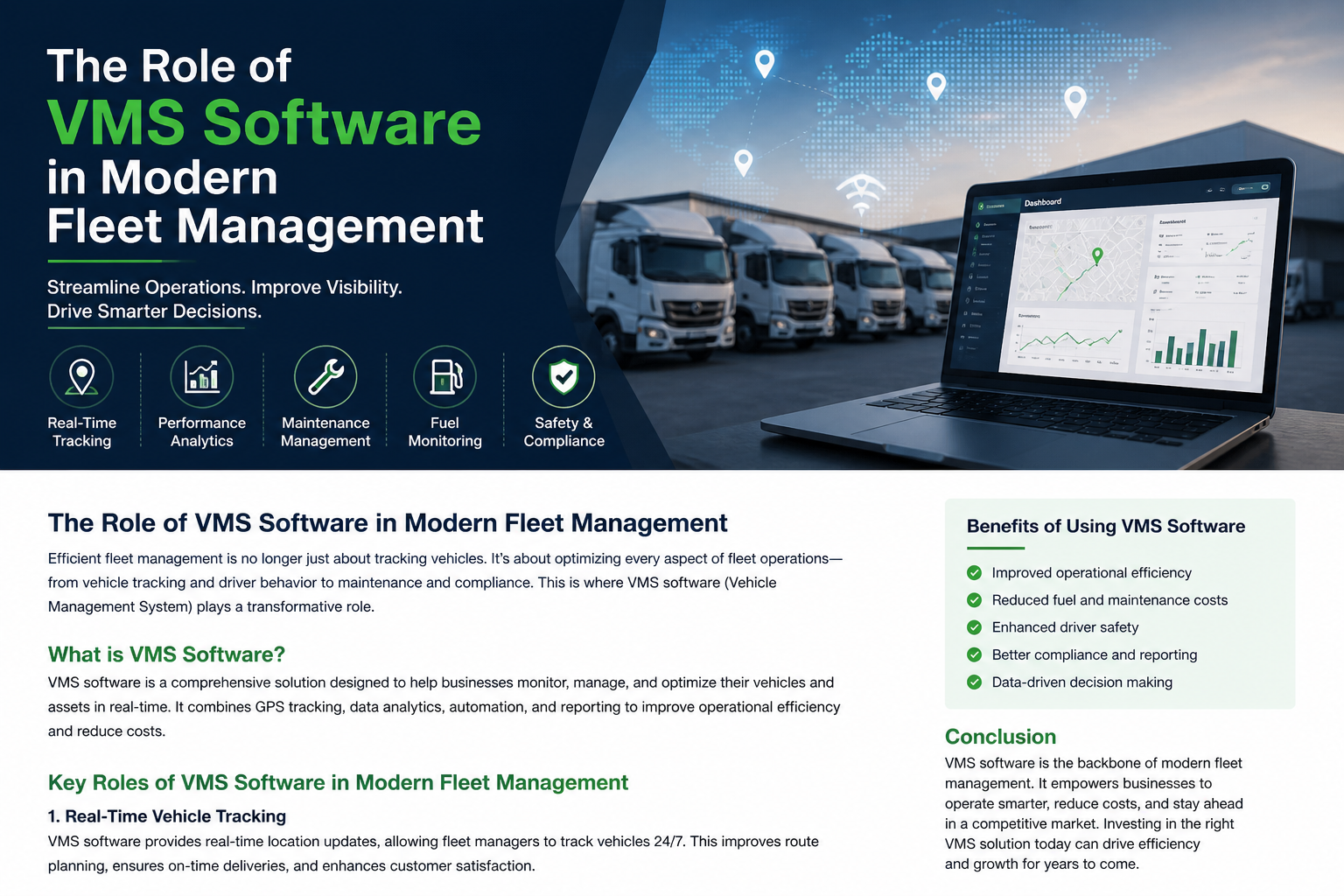
Managing a fleet in today’s fast-paced transportation industry is more complex than ever. Businesses that rely on vehicles for logistics, deliveries, transportation, or field services must balance efficiency, cost control, safety, and compliance. This is where VMS software (Vehicle Management System software) plays a critical role.
Table Of Content
- What Is VMS Software?
- Why Modern Fleet Management Needs VMS Software
- Key Benefits of VMS Software in Fleet Management
- 1. Real-Time Fleet Tracking
- 2. Improved Fuel Efficiency
- 4. Enhanced Driver Safety
- 6. Regulatory Compliance Management
- 7. Data Analytics and Reporting
- Industries That Benefit from VMS Software
- Logistics and Transportation
- E-Commerce and Delivery Services
- Construction Industry
- Healthcare and Emergency Services
- Public Transportation
- The Future of VMS Software in Fleet Management
- How to Choose the Right VMS Software
- Final Thoughts
Modern fleet management is no longer limited to tracking vehicle locations. Advanced VMS solutions now offer real-time insights, predictive maintenance, driver monitoring, fuel management, and route optimization—all within a centralized platform.
Companies looking to streamline operations and improve fleet performance are increasingly adopting advanced solutions like Fleet Management Software to gain better visibility and control over their transportation systems.
What Is VMS Software?
VMS software, or Vehicle Management System software, is a digital platform designed to help businesses monitor, manage, and optimize their vehicle fleets. It integrates multiple fleet-related operations into a single system, enabling managers to make data-driven decisions.
These systems typically include:
- GPS vehicle tracking
- Driver behavior monitoring
- Fuel usage analysis
- Maintenance scheduling
- Route optimization
- Compliance management
- Reporting and analytics
- Real-time alerts and notifications
By automating repetitive tasks and collecting actionable data, VMS software reduces operational inefficiencies and improves overall fleet productivity.
Why Modern Fleet Management Needs VMS Software
Traditional fleet management methods often rely on spreadsheets, manual logs, and fragmented communication systems. These outdated processes can lead to:
- Higher operational costs
- Poor vehicle utilization
- Increased fuel consumption
- Delayed deliveries
- Compliance risks
- Reduced driver accountability
VMS software eliminates these issues by providing centralized visibility and automated management tools.
In today’s competitive business environment, companies need smarter technologies to maintain efficiency while reducing operational expenses.
Key Benefits of VMS Software in Fleet Management
1. Real-Time Fleet Tracking
One of the most important features of VMS software is real-time GPS tracking. Fleet managers can instantly monitor vehicle locations, routes, and movement patterns.
This helps businesses:
- Improve dispatch accuracy
- Reduce unauthorized vehicle use
- Respond quickly to emergencies
- Provide accurate delivery updates
- Increase customer satisfaction
Real-time visibility also allows managers to make immediate operational decisions when unexpected issues arise.
2. Improved Fuel Efficiency
Fuel costs represent a major portion of fleet expenses. VMS software helps companies monitor fuel usage and identify inefficiencies.
The software can detect:
- Excessive idling
- Harsh driving behaviors
- Route inefficiencies
- Fuel theft
- Engine performance problems
By optimizing routes and improving driver behavior, businesses can significantly reduce fuel consumption and operational costs.3. Predictive Maintenance and Vehicle Health Monitoring
Unexpected vehicle breakdowns can disrupt operations and increase maintenance expenses.
VMS software enables preventive and predictive maintenance by tracking:
- Engine diagnostics
- Mileage
- Service schedules
- Tire conditions
- Battery performance
- Oil change intervals
Automated maintenance alerts help businesses avoid costly repairs and minimize vehicle downtime.
This proactive approach extends vehicle lifespan and improves fleet reliability.
4. Enhanced Driver Safety
Driver behavior directly impacts fleet safety, insurance costs, and company reputation.
Advanced VMS platforms monitor:
- Speeding
- Harsh braking
- Rapid acceleration
- Distracted driving
- Seatbelt usage
- Fatigue indicators
Fleet managers can use this data to provide targeted driver training and improve road safety.
Safer driving habits reduce accident risks, insurance claims, and vehicle wear and tear.5. Route Optimization
Efficient route planning is essential for reducing delivery times and operational costs.
VMS software uses real-time traffic data and intelligent algorithms to identify the most efficient routes.
Benefits include:
- Faster deliveries
- Lower fuel usage
- Reduced traffic delays
- Better customer experience
- Improved vehicle utilization
Businesses that depend on timely deliveries can greatly benefit from automated route optimization.
6. Regulatory Compliance Management
Fleet operators must comply with various transportation regulations and safety standards.
VMS software helps automate compliance tasks such as:
- Driver log management
- Vehicle inspection reports
- License tracking
- Insurance documentation
- Emission monitoring
Automated compliance tracking reduces administrative workload and helps businesses avoid penalties.
7. Data Analytics and Reporting
Modern VMS software provides detailed reports and analytics that help businesses make informed decisions.
Fleet managers can analyze:
- Vehicle performance
- Driver efficiency
- Fuel trends
- Maintenance history
- Operational costs
- Delivery performance
These insights help organizations identify improvement opportunities and optimize overall fleet operations.
Industries That Benefit from VMS Software
Logistics and Transportation
Companies use VMS software to manage large fleets, optimize delivery routes, and monitor shipments in real time.
E-Commerce and Delivery Services
Online retailers use fleet management systems to improve delivery speed and customer satisfaction.
Construction Industry
Construction companies use VMS platforms to monitor heavy equipment and service vehicles across multiple sites.
Healthcare and Emergency Services
Medical transport providers depend on real-time fleet tracking to improve emergency response times.
Public Transportation
Bus operators and transit systems use VMS software to improve scheduling, safety, and passenger services.
The Future of VMS Software in Fleet Management
Fleet management technology continues to evolve rapidly.
Future trends in VMS software include:
- Artificial Intelligence (AI)
- Machine learning analytics
- IoT-enabled vehicle monitoring
- Autonomous vehicle integration
- Advanced predictive maintenance
- Cloud-based fleet management systems
- Electric vehicle fleet optimization
As businesses increasingly rely on automation and data-driven operations, VMS software will become even more essential.
How to Choose the Right VMS Software
Selecting the right fleet management solution depends on several factors.
Businesses should consider:
- Scalability
- Ease of use
- Integration capabilities
- Real-time tracking features
- Mobile accessibility
- Customer support
- Reporting functionality
- Pricing and ROI
A well-designed solution should align with business goals while offering flexibility for future growth.
Final Thoughts
The role of VMS software in modern fleet management is more important than ever. Businesses that adopt advanced fleet management technologies gain significant advantages in efficiency, cost reduction, safety, and operational control.
From real-time tracking to predictive maintenance and intelligent analytics, VMS software helps organizations streamline operations and improve fleet performance.
Companies seeking to modernize their transportation operations should invest in reliable and scalable Fleet Management Software solutions to remain competitive in today’s rapidly evolving logistics landscape.
By leveraging the right technology, businesses can enhance productivity, improve customer satisfaction, and build a more efficient future for fleet management.







No Comment! Be the first one.