


Understanding DLI for Disability Benefits in San Antonio
Navigating disability benefits can feel complex, especially when unfamiliar terms come into play. One such term is Date Last Insured (DLI)—a critical factor in determining eligibility for Social...

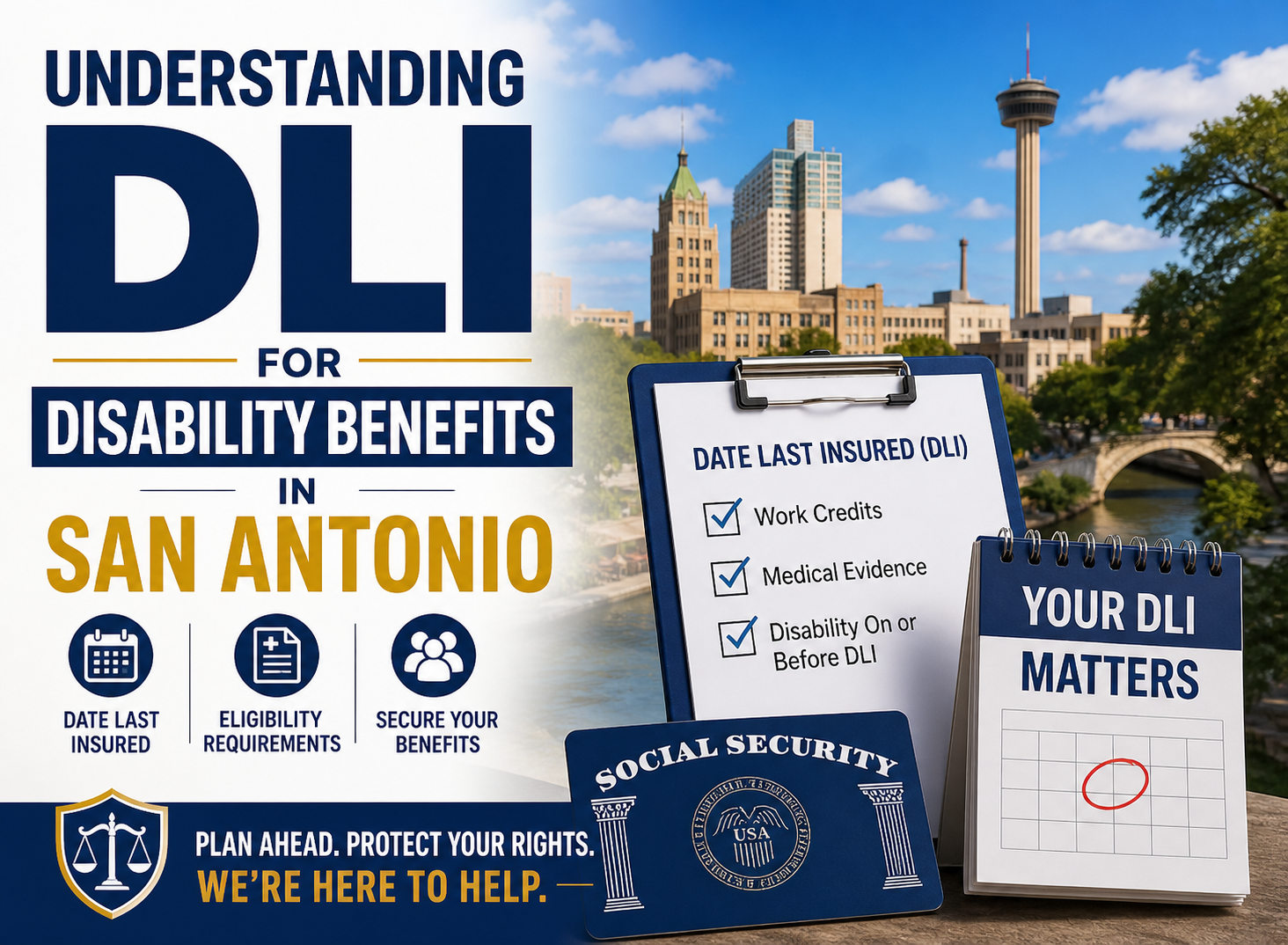
Navigating disability benefits can feel complex, especially when unfamiliar terms come into play. One such term is Date Last Insured (DLI)—a critical factor in determining eligibility for Social Security Disability Insurance (SSDI). If you are applying for benefits in San Antonio, understanding how DLI works can significantly impact your claim.
Table Of Content
- What Is DLI in Disability Benefits?
- Why DLI Matters for SSDI Claims
- How Is DLI Calculated?
- Medical Evidence and DLI
- Common Mistakes to Avoid
- 1. Applying Too Late
- 2. Lack of Medical Records
- 3. Misunderstanding Eligibility
- 4. Ignoring Work History
- What Happens If Your DLI Has Passed?
- How Legal Guidance Can Help
- Tips for Strengthening Your Claim
- Conclusion
- Frequently Asked Questions (FAQs)
- What does DLI mean in disability benefits?
- Can I qualify for SSDI after my DLI expires?
- How can I find my DLI?
- What if I don’t have enough work credits?
- Why is medical evidence important for DLI?
In this guide, we’ll break down everything you need to know about DLI for Disability Benefits in San Antonio, including how it affects eligibility, how it’s calculated, and what steps you can take to strengthen your claim.
What Is DLI in Disability Benefits?
The Date Last Insured (DLI) refers to the last date you are eligible for SSDI benefits based on your work history and Social Security contributions. To qualify for SSDI, you must have worked and paid Social Security taxes for a certain number of years.
Your insured status does not last forever. If you stop working, your coverage gradually expires. The DLI marks the final day you remain insured for disability benefits.
Understanding DLI for Disability Benefits in San Antonio is essential because your disability must begin on or before your DLI to qualify for SSDI.
Why DLI Matters for SSDI Claims
DLI is one of the most important factors in determining whether your SSDI claim will be approved. Even if you have a legitimate disability, your claim may be denied if:
- Your condition began after your DLI
- You cannot provide medical evidence proving your disability existed before your DLI
This is why applicants must carefully review their work history and medical records when applying.
For individuals dealing with DLI for Disability Benefits in San Antonio, timing and documentation are everything. Ensuring that your medical evidence aligns with your insured status is key to a successful claim.
How Is DLI Calculated?
Your DLI is calculated based on your work credits. These credits are earned through employment where you pay Social Security taxes.
Here’s a simplified breakdown:
- You typically need 40 work credits to qualify for SSDI
- At least 20 credits must be earned in the last 10 years before your disability begins
- If you stop working, your insured status may expire within a few years
For example, if you worked steadily until 2020 but stopped afterward, your DLI might fall somewhere between 2023 and 2025, depending on your work record.
When evaluating DLI for Disability Benefits in San Antonio, the Social Security Administration (SSA) uses your earnings history to determine your insured period.
Medical Evidence and DLI
One of the most common challenges applicants face is proving that their disability began before their DLI. Medical evidence plays a crucial role in this process.
Important documentation includes:
- Medical records and physician notes
- Diagnostic test results (X-rays, MRIs, lab reports)
- Treatment history and prescribed medications
- Statements from healthcare providers
If your records do not clearly show that your condition existed before your DLI, your claim may be denied—even if you are currently disabled.
For this reason, individuals applying under DLI for Disability Benefits in San Antonio should gather comprehensive and well-documented medical evidence.
Common Mistakes to Avoid
Understanding DLI can help you avoid costly errors during the application process. Some common mistakes include:
1. Applying Too Late
Waiting too long to apply can result in your insured status expiring before your disability is documented.
2. Lack of Medical Records
Incomplete or missing medical evidence can weaken your claim.
3. Misunderstanding Eligibility
Many applicants assume they qualify based on disability alone, without considering their DLI.
4. Ignoring Work History
Failing to review your work credits can lead to confusion about your insured status.
Avoiding these mistakes is especially important when dealing with DLI for Disability Benefits in San Antonio, where proper timing and documentation are essential.
What Happens If Your DLI Has Passed?
If your DLI has already expired, you may still have options—but SSDI may no longer be one of them.
Alternative options include:
- Supplemental Security Income (SSI): A needs-based program that does not require work credits
- Filing an appeal if you believe your disability began before your DLI
- Providing additional medical evidence to support your case
Even if your DLI has passed, it’s still worth exploring your eligibility and speaking with a qualified professional.
How Legal Guidance Can Help
Applying for disability benefits can be overwhelming, especially when dealing with technical requirements like DLI. Legal professionals can help you:
- Review your work history and determine your DLI
- Gather and organize medical evidence
- Ensure your application meets SSA requirements
- Represent you during appeals if needed
Working with experienced professionals, such as Christopher Le Law, can provide clarity and guidance throughout the process.
Tips for Strengthening Your Claim
To improve your chances of approval, consider the following tips:
- Apply as early as possible once you become disabled
- Keep detailed medical records and maintain consistent treatment
- Communicate clearly with healthcare providers about your condition
- Verify your work credits through your Social Security statement
- Seek professional guidance if you are unsure about your eligibility
These steps can make a significant difference when navigating DLI for Disability Benefits in San Antonio.
Conclusion
Understanding how DLI works is essential for anyone applying for SSDI. It is not just about having a disability—it’s about proving that your condition began while you were still insured. By learning how DLI for Disability Benefits in San Antonio affects your eligibility, you can take the right steps to build a strong and well-supported claim.
Frequently Asked Questions (FAQs)
What does DLI mean in disability benefits?
DLI stands for Date Last Insured. It is the last date you are eligible for SSDI based on your work history.
Can I qualify for SSDI after my DLI expires?
Only if you can prove your disability began before your DLI. Otherwise, you may need to explore SSI benefits.
How can I find my DLI?
You can check your Social Security statement online or contact the SSA directly.
What if I don’t have enough work credits?
You may not qualify for SSDI, but you could still be eligible for SSI, depending on your financial situation.
Why is medical evidence important for DLI?
Medical records must show that your disability existed before your DLI. Without this proof, your claim may be denied.





No Comment! Be the first one.