


Why SIP Trunking for Business Replaces Traditional Phone Lines
Businesses no longer operate from one office with fixed desks and standard phone systems. Teams work across locations. Customers expect fast support. Companies need communication systems that scale...

Businesses no longer operate from one office with fixed desks and standard phone systems. Teams work across locations. Customers expect fast support. Companies need communication systems that scale without delays or rising infrastructure costs. Traditional phone lines struggle to support these modern business demands.
Table Of Content
- Limitations of Traditional Phone Lines
- 1. Lower Communication Costs
- Benefits for Small Businesses
- Recommended Security Measures
- Myth 1: SIP Trunking Is Only for Large Enterprises
- Myth 2: Internet Calls Are Unreliable
- Myth 3: SIP Trunking Is Difficult to Deploy
- Step 1: Assess Existing Infrastructure
- Step 2: Choose the Right SIP Provider
- Step 3: Upgrade Network Infrastructure
- Step 4: Configure Communication Systems
- Step 5: Train Employees
SIP trunking for business has become the preferred communication solution for companies that want flexibility, cost control, and reliable connectivity. Instead of relying on outdated copper phone lines, SIP trunking uses internet connectivity to manage voice communication through a digital network. This shift is transforming how businesses handle internal communication, customer support, and remote collaboration.
Traditional telecom systems once served businesses well. Today, they create limitations that affect growth, efficiency, and long-term operational performance. SIP trunking removes those barriers and provides a modern communication framework built for today’s digital environment.
What Is SIP Trunking for Business
SIP stands for Session Initiation Protocol. It is the technology that enables voice calls and communication sessions through internet networks.
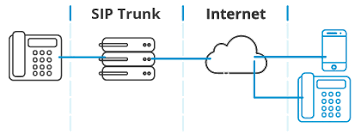
A SIP trunk replaces traditional phone lines by connecting a business phone system to the internet. This allows businesses to make and receive calls using Voice over Internet Protocol technology, also known as VoIP.
Unlike traditional systems that require physical infrastructure, SIP trunking works through virtual connections. Businesses gain greater flexibility without the need for expensive line installations or maintenance.
How Traditional Phone Systems Work
Traditional phone systems depend on physical copper wires connected through Public Switched Telephone Networks.
These systems require:
- Dedicated telephone lines
- On-site hardware
- Manual scaling
- Complex maintenance
- Physical installations
While reliable in the past, traditional systems now create operational challenges for modern businesses.
Limitations of Traditional Phone Lines
| Limitation | Impact on Business |
| High call costs | Increased operating expenses |
| Limited scalability | Slow business expansion |
| Hardware dependency | Expensive maintenance |
| Weak remote support | Reduced flexibility |
| Long installation times | Operational delays |
| Outdated infrastructure | Lower efficiency |
Businesses now require systems that adapt quickly. Traditional telecom infrastructure cannot match those expectations.
Why SIP Trunking Is Replacing Traditional Phone Lines
1. Lower Communication Costs
Cost reduction remains one of the biggest reasons businesses switch to SIP trunking.
Traditional systems involve several recurring expenses:
- Line rental fees
- Maintenance charges
- Hardware upgrades
- Long-distance call costs
- Installation fees
SIP trunking reduces these costs by routing calls through internet connections instead of physical phone networks.
Businesses only pay for the channels they use. This creates better cost control and reduces unnecessary telecom spending.
2. SIP Trunking Supports Remote Work
Modern businesses rely heavily on hybrid and remote work models.
Traditional systems tie communication to physical office locations. Employees outside the office often face limitations when handling calls or accessing company communication systems.
SIP trunking removes these restrictions.
Employees can:
- Use business numbers remotely
- Access voicemail online
- Transfer calls from any device
- Stay connected through mobile applications
- Join communication systems from any location
This flexibility supports productivity while improving employee collaboration.
3. Faster Scalability for Growing Businesses
Business communication needs change quickly. Traditional systems require new line installations whenever a company expands.
That process often involves:
- Waiting periods
- Infrastructure work
- Additional hardware
- Increased maintenance
SIP trunking allows businesses to add communication channels instantly through software-based management.
This scalability supports:
- Seasonal demand increases
- Rapid company growth
- New branch openings
- Remote team expansion
Businesses gain communication flexibility without operational disruption.
4. Better Call Quality and Reliability
Modern SIP providers offer high-definition voice quality with stable internet connectivity.
Traditional systems often suffer from:
- Static interference
- Hardware failures
- Physical line damage
- Poor international call quality
SIP trunking improves communication clarity while reducing downtime.
Advanced routing systems automatically redirect calls during outages. This ensures communication continuity and protects customer service operations.
5. Reduced Hardware Dependency
Traditional telecom systems require extensive on-site hardware.
This includes:
- PBX systems
- Wiring infrastructure
- Maintenance equipment
- Dedicated telecom rooms
SIP trunking reduces these infrastructure demands significantly.
Businesses can operate with:
- Cloud-based systems
- Minimal hardware
- Simplified maintenance
- Lower upgrade costs
This creates a more efficient communication environment.
6. Improved Business Continuity
Unexpected outages can disrupt communication and affect customer trust.
Traditional systems are vulnerable to:
- Weather damage
- Physical infrastructure failures
- Office power disruptions
SIP trunking improves resilience through cloud-based routing and geographic redundancy.
If one office becomes unavailable, calls can reroute automatically to another location or device.
This ensures:
- Continued customer support
- Reduced downtime
- Stable communication access
- Stronger operational continuity
7. Easier Integration With Modern Business Tools
Businesses now use multiple digital platforms for operations and customer management.
SIP trunking integrates easily with:
- CRM platforms
- Collaboration tools
- Cloud communication systems
- Customer support software
- Video conferencing solutions
Traditional systems often lack compatibility with these modern technologies.
Integrated communication improves efficiency and streamlines workflow management.
How SIP Trunking Improves Customer Experience
Customer communication directly affects brand reputation.
SIP trunking improves customer interactions through:
- Faster call routing
- Better voice clarity
- Reduced hold times
- Flexible support systems
- Improved call management
Businesses can also implement advanced features such as:
- Interactive voice response
- Call recording
- Automated routing
- Multi-location support
These features create a smoother customer experience.
SIP Trunking for Small Businesses
Small businesses often struggle with high telecom costs and limited resources.
SIP trunking offers affordable communication without large infrastructure investments.
Benefits for Small Businesses
| Benefit | Business Impact |
| Lower costs | Better budget management |
| Remote support | Flexible operations |
| Fast deployment | Reduced delays |
| Scalable channels | Easier growth |
| Cloud integration | Improved efficiency |
Small businesses gain enterprise-level communication features without enterprise-level expenses.
Security in SIP Trunking for Business
Security remains critical for internet-based communication systems.
Modern SIP providers use advanced protection methods such as:
- Encryption protocols
- Session border controllers
- Traffic monitoring
- Firewall protection
- Fraud prevention systems
Businesses should also implement strong internal security practices.
Recommended Security Measures
- Use secure passwords
- Enable multi-factor authentication
- Monitor network activity
- Keep systems updated
- Limit unauthorised access
Strong security protects sensitive business communication and customer information.
Common Myths About SIP Trunking
Myth 1: SIP Trunking Is Only for Large Enterprises
Businesses of all sizes now use SIP trunking. Small companies benefit from cost savings and flexibility.
Myth 2: Internet Calls Are Unreliable
High-quality internet connections provide stable and clear communication. Modern SIP providers use advanced routing systems to maintain reliability.
Myth 3: SIP Trunking Is Difficult to Deploy
Professional providers simplify deployment with managed installation and support services.
How to Transition From Traditional Phone Lines to SIP Trunking
Businesses should follow a structured migration process.
Step 1: Assess Existing Infrastructure
Review current phone systems, bandwidth capacity, and business communication needs.
Step 2: Choose the Right SIP Provider
Select a provider with strong reliability, support, and security capabilities.
Step 3: Upgrade Network Infrastructure
Ensure internet connectivity supports voice traffic effectively.
Step 4: Configure Communication Systems
Integrate SIP services with existing PBX or cloud communication platforms.
Step 5: Train Employees
Help staff understand system features and communication workflows.
Future of Business Communication
Business communication continues moving toward cloud-based infrastructure.
Traditional phone systems no longer align with:
- Hybrid work environments
- Digital collaboration
- Flexible operations
- Modern customer service expectations
SIP trunking supports future communication demands with scalable and adaptable technology.
Emerging developments include:
- AI-powered call analytics
- Smart routing systems
- Unified communication platforms
- Improved mobile integration
- Enhanced collaboration tools
Businesses adopting SIP trunking today prepare themselves for long-term operational efficiency.
Why Companies Are Moving Away From Traditional Telecom Systems
Traditional telecom infrastructure creates several operational disadvantages:
- High operational costs
- Slow scalability
- Limited flexibility
- Hardware dependency
- Weak remote communication support
SIP trunking solves these challenges through internet-based communication that aligns with modern business operations.
Companies gain:
- Greater flexibility
- Better scalability
- Reduced costs
- Stronger communication reliability
- Improved customer service capabilities
This shift explains why SIP trunking continues replacing traditional phone systems across industries worldwide.
How Almens Consult Can Help You
Almens Consult helps businesses modernise communication infrastructure with advanced SIP trunking and VoIP solutions. Their team provides professional support for system deployment, cloud communication integration, telecom upgrades, and scalable business phone systems. Whether your company needs reliable remote communication, cost-effective voice services, or enterprise-level telecom solutions, Almens Consult delivers customised communication strategies designed for long-term operational performance.
Conclusion
Business communication has changed significantly. Companies now require systems that support mobility, scalability, and digital collaboration. Traditional phone lines cannot meet these modern operational requirements efficiently.
SIP trunking for business provides a flexible and cost-effective alternative that improves communication quality while reducing infrastructure complexity. Businesses gain stronger scalability, remote accessibility, and operational reliability without relying on outdated telecom systems.
As organisations continue adopting cloud technology and hybrid work models, SIP trunking becomes an essential part of modern communication infrastructure. Companies that transition today position themselves for stronger performance, improved customer communication, and long-term business growth.







No Comment! Be the first one.