



Percale vs Sateen vs Jersey: A Dermatologist-Backed Guide to Choosing Bed Fabric for Sensitive Skin in Hot Climates
The Skin Problem That Starts in Your Bedroom Most people who suffer from sensitive skin spend considerable time and money on the products they apply to their skin – the right cleanser, the...

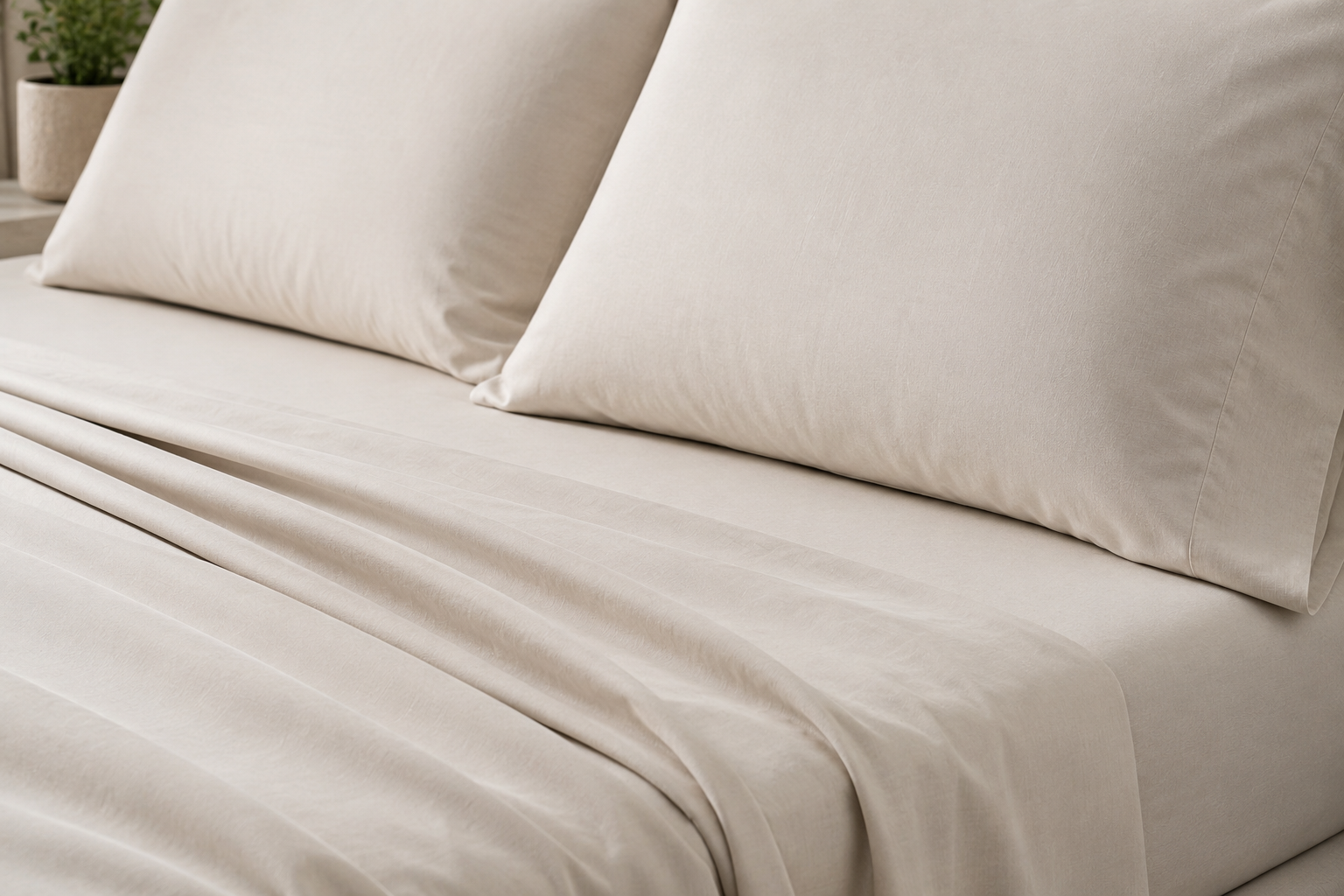
The Skin Problem That Starts in Your Bedroom
Most people who suffer from sensitive skin spend considerable time and money on the products they apply to their skin – the right cleanser, the fragrance-free moisturiser, the gentle sunscreen. They read ingredient labels carefully and avoid known irritants in their skincare routine with real discipline. Yet many of these same people go to bed every night and spend eight hours with their skin in direct, sustained contact with a fabric that they chose based on price or appearance, with no consideration of how that fabric interacts with sensitive or reactive skin.
Table Of Content
- The Skin Problem That Starts in Your Bedroom
- What Sensitive Skin Actually Means – And Why Fabric Is So Relevant
- Percale – The Dermatologist’s First Recommendation for Hot, Sensitive Skin
- Sateen – Beautiful to Look At, But Problematic for Sensitive Skin in Heat
- Jersey – Soft but Fundamentally Unsuitable for Pakistan’s Climate
- The Role of Dye and Finishing Chemicals in Skin Reactions
- Building a Skin-Friendly Sleep Environment in Pakistan’s Hot Climate
- Final Thoughts
Dermatologists who treat conditions like eczema, contact dermatitis, rosacea, folliculitis, and general skin sensitivity consistently identify the sleeping environment as one of the most overlooked variables in skin health management. The fabric you sleep on is in contact with your face, your neck, your arms, and your body for more hours each night than any skincare product spends on your skin during the day. In hot climates like Pakistan’s, where heat and humidity amplify every skin reaction, this contact becomes even more consequential. The wrong fabric can undo the work of the most carefully chosen skincare routine. The right fabric actively supports skin health while you sleep.
Beddy’s Studio has built their fabric range with this understanding at its foundation, offering cotton options that are appropriate for sensitive skin in Pakistan’s demanding climate. But before exploring what works best, it is worth understanding exactly what each of the three major fabric types – percale, sateen, and jersey – actually does to and for the skin, and why the differences between them matter so much for people with reactive or sensitive skin conditions.
What Sensitive Skin Actually Means – And Why Fabric Is So Relevant
The term “sensitive skin” covers a wide spectrum of conditions and experiences. At one end are people with clinically diagnosed inflammatory skin conditions – eczema, also called atopic dermatitis, which affects a significant and growing portion of Pakistan’s population; psoriasis; contact dermatitis; and rosacea. At the other end are people without a specific diagnosis who simply notice that their skin reacts easily – becoming red, itchy, or irritated in response to friction, heat, sweat, or certain materials. In the middle is a large group of people whose skin behaves normally most of the time but flares in hot weather, during hormonal changes, or when exposed to certain environmental triggers.
What all of these experiences have in common is a compromised or hyperreactive skin barrier. The skin barrier – the outermost layer of the epidermis – is responsible for keeping moisture in and irritants out. When it is functioning well, it absorbs minor friction and chemical exposure without reacting. When it is compromised or naturally reactive, the same level of exposure that a normal skin barrier handles without incident triggers inflammation, itching, or redness. Fabric friction, heat retention, and moisture trapping are three of the most consistent aggravators of a compromised skin barrier, and they are all variables that are determined by the type of fabric covering your bed. In Pakistan’s hot climate, where the skin barrier is already under additional stress from heat, UV exposure, and sweat, the choice of sleeping fabric is a dermatologically significant decision. This is why Beddys focusing on quality cotton fabrics is not simply a commercial preference – it is the right answer for a market where sensitive skin concerns are widespread and the climate makes those concerns more pressing.
Percale – The Dermatologist’s First Recommendation for Hot, Sensitive Skin
Percale is a plain weave fabric – constructed in a one-thread-over, one-thread-under pattern that creates a matte, smooth, crisp surface with a relatively open structure. It is the fabric that most high-end hotels use for their bed linen, and it is consistently the first recommendation from dermatologists when patients ask about bedding for sensitive skin in warm climates. Understanding why requires looking at what percale does on three specific dimensions: surface texture, breathability, and moisture management.
The surface texture of percale is smooth and consistent, without the sheen or the slight slip of sateen or the stretch and pile of jersey. This smoothness is important for sensitive skin because it minimises the micro-friction that occurs as the body moves during sleep. Every time a sleeper shifts position, their skin slides across the fabric surface. On a rough or irregular surface, this movement creates friction that can aggravate sensitive skin, disrupt the skin barrier, and in people with eczema or dermatitis, trigger a scratch-itch cycle that further damages the skin overnight. Percale’s smooth, even surface reduces this friction to its minimum, allowing the skin to move across it without the inflammatory friction response.
The breathability of percale is its second major dermatological advantage. The plain weave structure leaves space between threads for air to circulate, which means the microclimate between the body and the fabric remains cooler and drier than it would with a denser weave. For sensitive skin in a hot climate, this temperature regulation is critical – heat is one of the most reliable triggers for inflammatory skin reactions, and a fabric that traps body heat creates exactly the warm, humid microclimate that causes flares. Beddy’s percale cotton bedsheets maintain a notably cooler surface temperature throughout the night precisely because of this open weave structure, making them the most dermatologically appropriate choice for Pakistan’s summer months and for year-round use in coastal cities like Karachi.
Sateen – Beautiful to Look At, But Problematic for Sensitive Skin in Heat
Sateen is woven with a different structure from percale – most of the threads run along the surface rather than crossing over and under in equal measure, which creates a fabric with a subtle sheen, a silkier hand feel, and a slightly heavier drape. Visually, sateen is luxurious. It photographs beautifully, it feels indulgently smooth when you first touch it, and it has a richness that percale does not replicate. For many consumers, these qualities make sateen feel like the more premium choice.
For people with sensitive skin in hot climates, however, sateen presents several significant disadvantages that its visual appeal does not compensate for. The first is heat retention. Because more thread surface is exposed on the face of the fabric, sateen is denser and less breathable than percale. It traps body heat more effectively, which in Pakistan’s climate means a warmer sleeping microclimate and a greater likelihood of the heat-triggered skin reactions that sensitive skin sufferers experience. Sweating more during the night because the fabric is trapping heat is not just an issue of comfort – it is a dermatological problem. Sweat on the skin surface for extended periods breaks down the skin barrier, increases the growth of bacteria on the skin, and can trigger or worsen folliculitis, acne, and eczema.
The second issue with sateen for sensitive skin is the chemical finishing that is often applied to achieve its characteristic sheen. Many sateen fabrics – particularly at lower price points – are treated with finishing chemicals that enhance the lustre of the surface but remain present in the fabric long after the initial washing. These residual chemicals are a known cause of contact dermatitis in sensitive individuals. Dermatologists frequently see patients whose skin has been reacting to a new bedsheet without the patient connecting the timing of their reaction to the fabric change. Beddys does not position sateen as their primary recommendation for Pakistan’s climate or for sensitive skin precisely because the heat retention and potential finishing chemical issues make it a less appropriate choice in this specific context, even though sateen has genuine appeal in cooler, drier environments.
Jersey – Soft but Fundamentally Unsuitable for Pakistan’s Climate
Jersey fabric is made using a knit construction rather than a woven one – the threads loop around each other in the same structure used to make a cotton t-shirt, which gives jersey bed linen its characteristic softness, stretch, and casual feel. For people whose skin reacts to the crispness of percale or the slight heaviness of sateen, jersey can feel immediately appealing. It is gentle, it has give, and it wraps around the body in a way that woven fabrics do not.
The dermatological and practical problems with jersey in hot climates, however, are significant enough to make it a poor choice for most Pakistani sleepers, particularly those with sensitive skin. The knit structure of jersey, despite its apparent softness, tends to pill with use – forming small fabric balls on the surface that create irregular texture and friction against the skin over time. A jersey sheet that feels wonderfully smooth on the first night feels noticeably different after six months of washing and use, and the surface degradation that drives this change creates exactly the uneven friction surface that dermatologists advise against for reactive skin.
More significantly, jersey is the least breathable of the three fabric types. Its knit structure and the t-shirt-like cotton it is typically made from retain both heat and moisture very effectively – which, in Pakistan’s summer climate, creates a sleeping surface that becomes warm and damp faster than either percale or sateen. For someone with eczema or heat-triggered skin sensitivity, jersey bedding in a Pakistani summer is one of the most counterproductive choices available. The initial softness is real, but it does not compensate for the thermal performance failure in a climate where heat management is the primary dermatological priority. Beddys has focused their cotton range on woven fabrics rather than jersey constructions for exactly this reason – understanding that the Pakistani climate makes breathability non-negotiable regardless of the tactile appeal that jersey offers.
The Role of Dye and Finishing Chemicals in Skin Reactions
Beyond the weave structure, the chemical treatment of bed fabric is a significant but rarely discussed source of skin irritation that affects a meaningful portion of Pakistan’s sensitive skin population. Raw cotton fabric, before it reaches the consumer, passes through numerous processing stages – bleaching, dyeing, softening, wrinkle-resistance treatment, and sometimes antimicrobial finishing. Each of these stages introduces chemical compounds into the fabric, and while most of these compounds wash out with the first few launderings, some residual chemical presence in the fabric is normal and can be problematic for reactive skin.
Formaldehyde-based wrinkle-resistance treatments are one of the most documented causes of contact dermatitis from bedding in dermatological literature. Azo dyes, used in some bright-coloured fabrics, can break down on the skin surface into compounds that trigger allergic reactions in sensitive individuals. Optical brighteners – chemicals that make white fabric appear whiter under light – are another relatively common skin irritant that persists in some fabrics across multiple washes. Dermatologists consistently advise patients with sensitive skin to wash new bed linen at least twice before use to remove as much of this chemical residue as possible, and to choose brands that are transparent about their fabric processing and dye practices.
Beddys cotton bedsheets, particularly their plain solid color and neutral tone options, use dyeing and finishing processes that are appropriate for a consumer base that includes people with sensitive and reactive skin. Choosing lighter, neutral colors over very bright or heavily saturated ones further reduces the dye load in the fabric and is a practical recommendation that dermatologists frequently make to eczema and dermatitis patients who are auditing their sleeping environment.
Building a Skin-Friendly Sleep Environment in Pakistan’s Hot Climate
The fabric choice is the most important variable in a skin-friendly sleeping environment, but it does not operate in isolation. The temperature of the room, the washing practices applied to the linen, and the frequency of sheet changes all contribute to the overall dermatological outcome of the sleeping environment. In Pakistan’s hot climate, where all of these variables are under additional pressure from heat and humidity, each one deserves deliberate attention.
Room temperature management – through ceiling fans, air conditioning, or strategic ventilation – reduces the baseline heat stress on sensitive skin during sleep and works together with a breathable percale fabric to keep the sleeping microclimate within the range that a reactive skin barrier can tolerate without flaring. Washing linen weekly, or every five to six days during the hottest months, removes the sweat, body oil, and bacterial accumulation that aggravates sensitive skin conditions over time. Using a fragrance-free, gentle detergent reduces the chemical residue in the fabric after washing. Avoiding fabric softener in the wash – or using it very sparingly – preserves the natural breathability of cotton that is one of percale’s primary dermatological advantages.
Beddys percale cotton bedsheet sets are designed to be easy to maintain in exactly this way – they hold their softness through repeated washing without requiring chemical softening, they retain their colour through multiple hot-season wash cycles, and their natural cotton construction responds well to the simple, gentle care routine that dermatologists recommend for sensitive skin households.
Final Thoughts
The choice between percale, sateen, and jersey is not primarily an aesthetic decision for people with sensitive skin living in Pakistan’s hot climate. It is a dermatological one, with real implications for how the skin barrier functions, how much inflammation the sleeping environment contributes, and how well the body recovers from daily skin stress during the night. Percale wins this comparison clearly in the context of hot, humid conditions and reactive skin – for its breathability, its smooth low-friction surface, its moisture management, and its durability across the washing frequency that Pakistan’s climate demands. Beddys has made quality percale cotton the foundation of their bedsheet range because it is the right fabric for the right climate – and for the skin of every Pakistani sleeper who deserves to wake up without the irritation that the wrong bedding choice quietly creates every night.




No Comment! Be the first one.